
Patio Screen Repair in Jacksonville, FL
A damaged patio screen can turn a comfortable outdoor living area into a space where mosquitoes, flies, leaves, and other debris become a constant problem. Tears near outdoor furniture, loose screening along patio walls, and worn panels around entrances can interfere with the everyday use of a screened patio.
Schnorr Home Improvements provides patio screen repair in Jacksonville, FL, and surrounding Northeast Florida communities. Whether an individual screen panel has been punctured, the mesh has pulled away from its frame, or several sections are showing signs of deterioration, we can help evaluate your existing screened patio and discuss appropriate repair or replacement options.
Screened patios come in different configurations. Some have screened perimeter walls beneath an existing roof or patio cover. Others are attached screen enclosures with their own framing and roof arrangements. The location of the damage, panel dimensions, accessibility, and condition of the surrounding framework all influence how repairs should be approached.
Not every damaged patio requires complete rescreening or a new enclosure. When the existing framing and most of the screening remain in suitable condition, replacing individual damaged panels may be a practical way to restore the screened barrier.
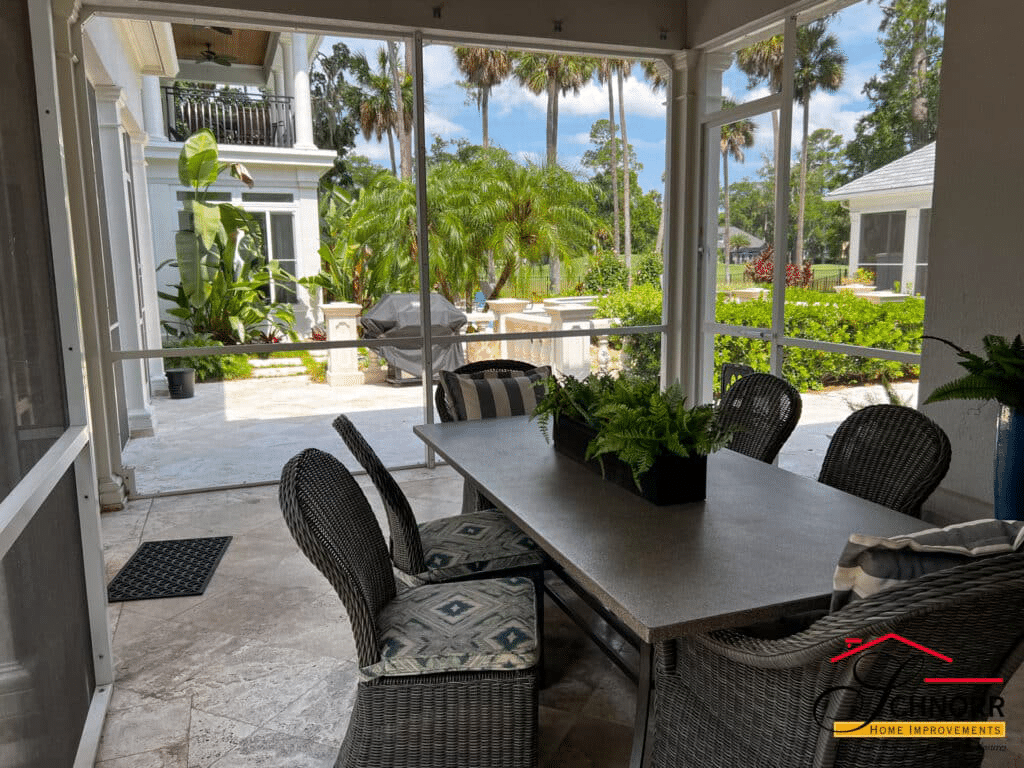
Serving Jacksonville and Northeast Florida since 1979, Schnorr Home Improvements brings decades of experience with residential screen enclosures and outdoor living improvements to homeowners seeking solutions for their existing patios.
Common Patio Screen Problems We Help Homeowners Address
Screened patios are used for dining, entertaining, relaxing, and moving between the home and backyard. Unlike screens in areas with limited foot traffic, patio screening is often located close to chairs, tables, grills, planters, doors, and frequently used walkways.
These everyday activities can contribute to damage, particularly when combined with Florida’s sunlight, humidity, wind, and seasonal weather.
Identifying how and where the damage developed helps determine which panels need attention and whether surrounding screening should also be evaluated.
Torn, Punctured, and Weathered Screen Panels
A screen panel may develop a tear after contact with furniture, a pet, a fallen branch, or an object being moved across the patio. Small punctures can also develop into larger openings as the mesh stretches or weakens.
Over time, prolonged exposure to sunlight and outdoor conditions can affect the flexibility and appearance of screen material. Older screening may become brittle, fray along its edges, or tear more easily when disturbed.
Common warning signs include:
- Holes or tears in patio wall screens.
- Fraying mesh near the edges of a panel.
- Screening that breaks or tears with light contact.
- Visible gaps allowing insects into the patio.
- Multiple panels showing similar signs of deterioration.
- Screen material that has become noticeably loose or distorted.
A damaged panel does not necessarily mean the entire patio needs new screening. The condition of the remaining panels is an important part of deciding how much work is appropriate.
Loose, Sagging, or Detached Patio Screening
Patio screens should remain securely attached within their supporting frames. When mesh begins to sag, ripple, or separate from the edges, it can create gaps and make the enclosure appear poorly maintained.
Loose screening may result from aging material, loss of tension, displaced retaining spline, or problems with the channel that holds the screen in place.
In some cases, the mesh itself remains intact, but the components securing it are no longer holding properly.
The appropriate solution depends on whether the existing screening can be secured reliably or whether replacing the affected panel would provide a better result.
Damage Around Furniture, Pets, and Landscaping
Outdoor patios often contain furniture and other items positioned close to screened walls. Chairs pushed against screening, tables moved during cleaning, and decorative planters placed near the perimeter can create repeated contact with the mesh.
Pets may also press against lower panels or scratch at screening near patio doors. Nearby shrubs and branches can rub against exterior screen surfaces, particularly during windy conditions.
Lower patio wall panels and sections near entrances often deserve closer inspection because they are more exposed to everyday contact.
Keeping furniture slightly away from screen walls, trimming vegetation that touches the enclosure, and addressing small openings promptly can help reduce avoidable damage.
Repairing Individual Patio Screen Panels
When damage is confined to one or a few sections, individual patio screen panel replacement may be a reasonable alternative to replacing screening throughout the enclosure.
The decision begins with evaluating the damaged panel and determining whether the surrounding frame can securely support replacement mesh.
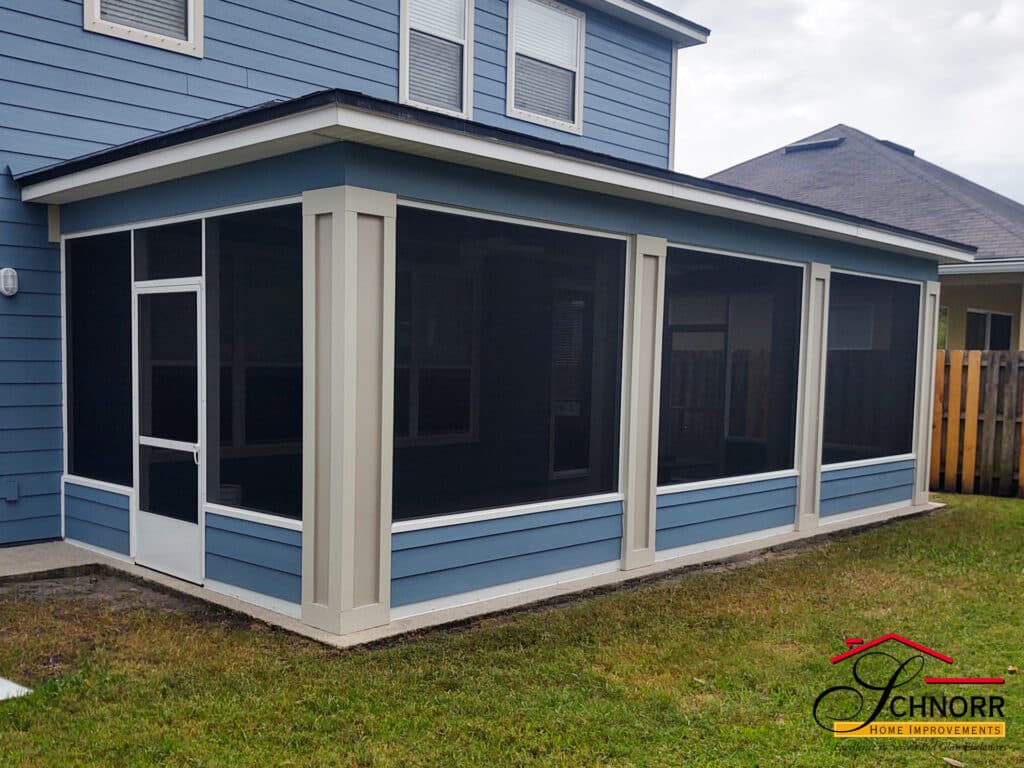
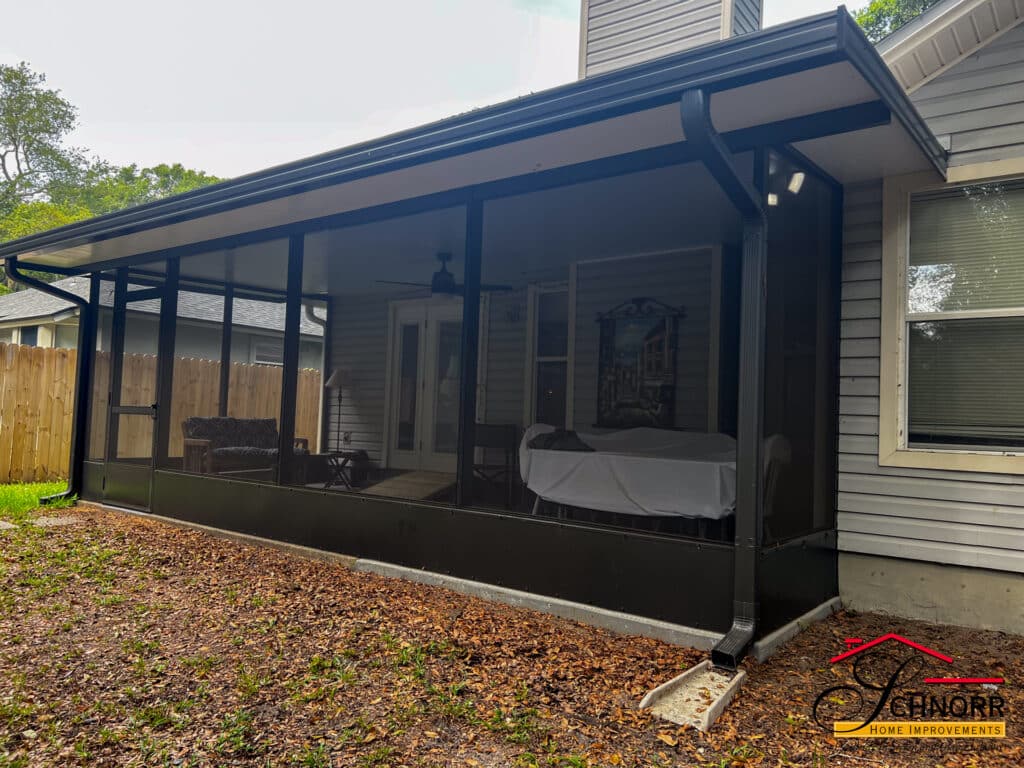
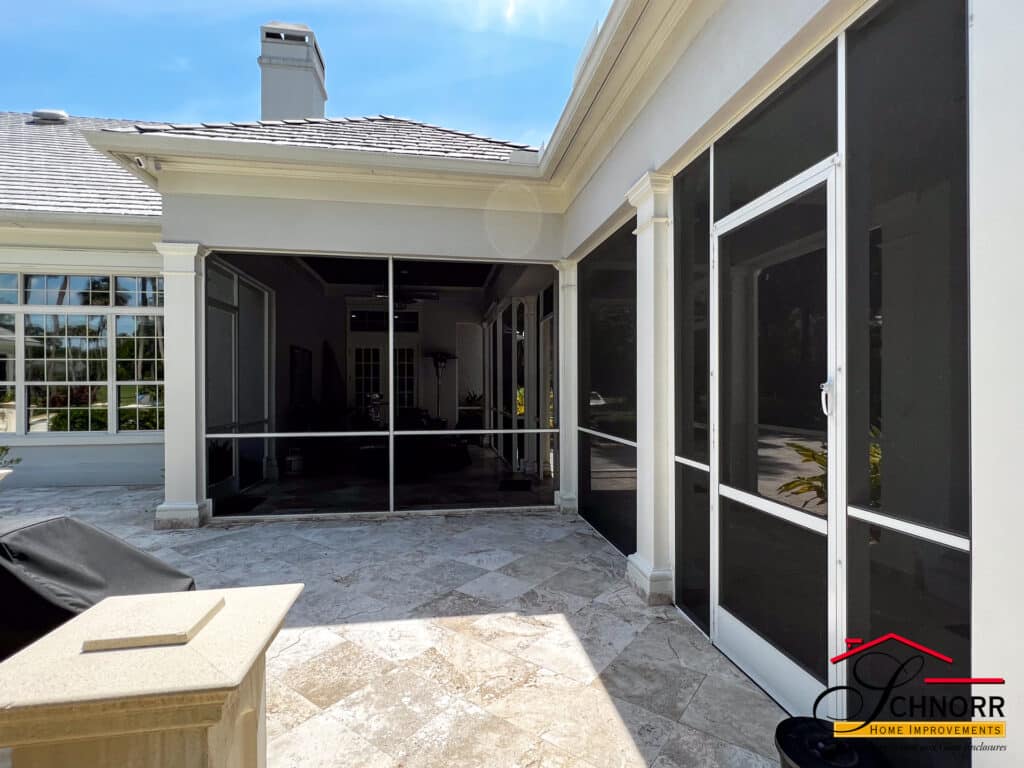
When One Damaged Panel Can Be Replaced
Many residential screened patios use individual screen openings formed by aluminum framing. Each opening contains mesh secured along the edges of the frame.
When a panel has a significant tear, multiple punctures, or deteriorated material, replacing the screening within that opening may be more practical than applying a small patch.
Panel replacement generally involves removing the damaged screening and installing compatible replacement mesh within the existing opening, provided the frame and retaining channel are suitable for reuse.
A properly fitted replacement should maintain appropriate tension without unnecessarily stressing the screen material or surrounding components.
This approach can be particularly useful when one patio wall section has been damaged by furniture or a pet while the remaining screens are still in good condition.
New screening may look different from older panels because weather exposure and age can change the appearance of existing mesh. Homeowners should consider this when deciding whether to replace only the affected section.
Screen Tension, Spline, and Frame Channels
Many patio screen panels are held in place by a flexible retaining spline that fits into a channel within the aluminum frame.
The spline secures the mesh around the perimeter of the opening. Its fit, along with the condition of the channel and the tension applied to the screening, helps determine whether the panel remains properly attached.
If the spline becomes loose or displaced, the mesh may pull away from the frame. A worn or damaged channel can also make it difficult to retain replacement screening securely.
Too little tension can leave the screen sagging. Excessive tension may distort the material or place unnecessary stress on the frame.
Before replacing a damaged panel, it is important to consider the condition of the mesh, retaining spline, and frame channel together rather than treating the visible tear as the only problem.
Choosing Replacement Screening for Your Patio
Replacement patio screening is available in different mesh types and configurations. The appropriate material depends on the existing enclosure, the location of the panel, and how the homeowner uses the patio.
A patio used primarily for quiet seating may have different screening priorities than one frequently used by children, pets, or guests moving between the house and backyard.
Mesh Visibility, Airflow, and Insect Protection
One of the main benefits of a screened patio is the ability to enjoy outdoor views and natural ventilation while reducing insect entry.
Screen mesh selection can affect all three characteristics.
Finer mesh openings may help limit smaller insects, but certain products can also change airflow and visibility. Heavier screening may offer different durability characteristics while appearing more noticeable than standard mesh.
Homeowners should consider:
- How much outdoor visibility they want to preserve.
- Whether mosquitoes or smaller insects are a particular concern.
- The importance of airflow through the patio.
- How the replacement screening will look beside existing panels.
- Whether the patio receives frequent physical contact from pets or furniture.
There is no single screen material that is automatically best for every screened patio.
Durability and Compatibility With Existing Framing
Replacement screening should be compatible with the existing frame dimensions, retaining channels, and installation requirements.
Some mesh products are designed for general insect protection, while others emphasize characteristics such as greater resistance to pet-related contact or different levels of visibility.
Material thickness, flexibility, and the dimensions of the screened opening can affect suitability.
A stronger or heavier mesh is not necessarily the right choice if the existing frame and retaining system cannot accommodate it properly.
Schnorr Home Improvements can discuss available replacement options in relation to the existing patio enclosure. Homeowners should confirm the proposed material and its specifications before approving the work.
Screen Repairs for Covered Patios and Patio Enclosures
Not all screened patios are constructed the same way. Some consist of screened walls installed beneath an existing solid patio roof. Others are part of a larger attached enclosure with a different combination of framing and roof components.
Understanding the configuration helps identify the screening that needs attention and any conditions that may affect access.
Patio Screen Walls Beneath Existing Roofs and Covers
A covered patio may have a permanent roof attached to the home, with screening installed around the open perimeter.
In this configuration, the screened wall sections help reduce insects and debris while the existing roof provides overhead coverage.
Damage commonly affects the vertical screen panels between supporting posts or aluminum framing members.
Repair considerations may include the height and width of each opening, the location of the screen-retaining channels, and whether furniture or other patio features restrict access.
A damaged wall screen beneath a solid roof does not automatically indicate a problem with the roof itself.
When a patio roof, support, or attachment appears damaged, that concern should be evaluated separately from the screen mesh.
Lower Panels, Corners, and Door Openings
Patio screen panels near the floor, at corners, and beside entrances often experience different types of wear than screening in less frequently used areas.
Lower panels may be exposed to pets, furniture legs, lawn equipment, and objects being moved in or out of the patio.
Corner sections and narrow openings require attention to panel dimensions and the condition of the surrounding retaining channels.
Where screening meets a patio door opening, gaps may develop along the adjacent fixed panels even when the door itself remains functional.
If the mesh within the screen door is damaged, or the door has problems involving its hinges, latch, alignment, or closing mechanism, those issues should be identified separately.
The objective is to determine whether the problem involves a fixed patio screen panel, the door assembly, or both.
Individual Screen Repair or Broader Patio Screen Replacement?
Replacing one damaged screen panel can make sense when the rest of the patio screening remains in serviceable condition.
However, repairing individual sections repeatedly may become less practical when numerous panels are deteriorating at approximately the same time.
A broader screen replacement may be worth considering when:
- Several patio wall panels have tears or holes.
- Screening throughout the enclosure has become brittle.
- Multiple panels are sagging or pulling away from their frames.
- New damage continues to appear after earlier repairs.
- The homeowner wants a more consistent appearance across the enclosure.
Replacing a group of aging panels may help address widespread wear without automatically requiring replacement of the supporting enclosure.
On the other hand, replacing every screen may be unnecessary when the damage is limited and the remaining mesh is still in suitable condition.
The number of affected panels, material condition, accessibility, and homeowner priorities should guide the decision.
Homeowners seeking a broader overview of available repairs can also review our Screen Repair services.
Existing Patio Frame Condition and Repair Considerations
Screen mesh repairs depend on the condition of the enclosure supporting the panels.
Before selecting a repair approach, it is useful to consider whether the existing framing is straight, securely attached, and capable of retaining replacement screening.
Visible problems may include distorted aluminum members, damaged frame channels, loose connections, corrosion, or movement in parts of the enclosure.
These conditions are different from ordinary mesh deterioration.
Replacing screen material alone may not resolve an issue involving a damaged frame or an unstable supporting component.
Access also matters. Furniture, built-in counters, landscaping, narrow side yards, and elevated screen openings may affect how the damaged area can be reached.
If the patio includes an existing roof or cover, concerns involving roof damage, water intrusion, or structural attachment should be evaluated separately from screen panel replacement.
A consultation provides an opportunity to identify the damaged screening, discuss the existing enclosure’s condition, and clarify which issues are included in the proposed work.
Why Choose Schnorr Home Improvements?
Schnorr Home Improvements has served Jacksonville and Northeast Florida homeowners since 1979, with extensive experience in residential screen enclosures, sunrooms, lanais, and related outdoor living structures.
That background is valuable when evaluating an existing screened patio because the condition of the screen mesh is only one part of the overall enclosure.
Frame layout, screen openings, patio access, roof configuration, and the way the outdoor area connects to the home can all influence the appropriate repair approach.
As an established, locally operated Jacksonville home improvement company, Schnorr Home Improvements provides homeowners with a familiar regional business to contact when their existing screened patio needs attention.
Whether the concern involves a torn panel, loose screening, or deterioration across multiple sections, our goal is to help you understand the condition of your patio and discuss practical options for addressing the damage.
Patio Screen Repair in Jacksonville and Northeast Florida
Schnorr Home Improvements serves homeowners throughout Jacksonville and surrounding Northeast Florida communities, including Mandarin, Jacksonville Beach, Atlantic Beach, Neptune Beach, Ponte Vedra Beach, Nocatee, St. Johns, Julington Creek, Fruit Cove, Orange Park, and Fleming Island.
Patios throughout the region experience different exposure conditions depending on their location, surrounding vegetation, proximity to coastal environments, and how frequently the outdoor space is used.
A patio surrounded by mature trees may experience more contact with branches and falling debris. A heavily used outdoor dining area may develop damage near furniture and entry points. Homes closer to coastal environments may also require additional attention to the condition of exposed enclosure components.
These differences make it important to evaluate the existing patio rather than assume every screen repair requires the same approach.
If your screened outdoor space is described as a lanai rather than a patio, you can also explore our Lanai Screen Repair services. Homeowners sometimes use the terms interchangeably, and the appropriate repair depends on the actual enclosure configuration.
Frequently Asked Questions About Patio Screen Repair
Can individual torn patio screen panels be replaced without rescreening the entire patio?
Yes. When damage is limited to one or a few screen panels and the surrounding framework remains suitable for reuse, individual panel replacement may be a practical option.
Many screened patios have separate mesh openings formed by aluminum framing. This allows the screening within an affected opening to be evaluated independently of the remaining panels.
For example, a tear caused by a patio chair may only affect one lower wall panel. If the neighboring screening remains in good condition, replacing every screen in the patio may not be necessary.
The existing frame, retaining channel, panel dimensions, and condition of the remaining mesh should be considered before determining the repair scope.
What commonly causes screened patio panels to tear or deteriorate?
Patio screen damage often results from a combination of everyday use and prolonged outdoor exposure.
Common causes include contact with patio furniture, pets scratching or pressing against mesh, nearby vegetation, windblown debris, and accidental punctures while moving equipment or household items.
Sunlight, humidity, and weather exposure can also contribute to gradual material deterioration.
Lower wall sections and panels near entrances may experience more frequent physical contact than screening in less accessible areas.
Identifying the likely cause of damage can help homeowners make practical adjustments, such as repositioning furniture or trimming vegetation, to reduce future contact with the screens.
Why are my patio screens sagging or pulling away from their frames?
Sagging patio screening may indicate that the mesh has lost tension, stretched, or become detached from its retaining channel.
Many patio screen panels use a flexible spline to secure the mesh within the aluminum frame. If the spline becomes displaced or no longer fits securely, the screen may loosen along one or more edges.
The condition of the frame channel also matters. A damaged or distorted channel may prevent the mesh from remaining securely attached.
The appropriate solution depends on whether the screening and retaining components remain serviceable or whether the panel should be replaced.
What type of replacement screen mesh should I consider for a screened patio in Florida?
The most suitable screen mesh depends on your patio’s existing framing, the size of the openings, and how you use the space.
Standard insect screening may be appropriate when airflow and outdoor visibility are primary concerns. Homeowners with pets or frequent contact near lower panels may want to ask about available materials with different durability characteristics.
Finer mesh can provide a different level of insect protection, but it may also affect ventilation or the view through the screening.
Not every material is compatible with every enclosure. Discuss the available options, their specifications, and compatibility with your existing patio before making a selection.
Is it better to replace several aging patio screens at once or repair them individually?
The answer depends on the condition of the remaining screening.
If one panel has an isolated tear and neighboring screens remain in good condition, individual replacement may be sufficient.
When several panels have become brittle, sagging, or damaged, replacing multiple sections together may be more practical than addressing each new failure separately.
Broader replacement can also provide a more consistent appearance, particularly when older screens have faded or weathered.
Homeowners should consider the extent of deterioration, access requirements, material compatibility, and the proposed scope of work before deciding.
Can damaged screens around patio doors, corners, and lower wall sections be repaired?
Damaged fixed-screen panels around patio doors, corners, and lower wall sections may be candidates for replacement when the existing framing and retaining channels remain suitable.
These areas often experience additional contact from furniture, pets, people entering and exiting, and outdoor equipment.
Narrow or irregularly shaped openings may require additional attention to the screen dimensions and surrounding frame condition.
If the screen door itself has torn mesh, or problems involving its hinges, latch, or alignment, those concerns should be described separately.
A closer evaluation can help distinguish damaged fixed screening from issues involving the door assembly.
What should I know before scheduling a patio screen repair consultation?
Before contacting Schnorr Home Improvements, take a few minutes to identify where the damage is located and approximately how many panels are affected.
It is helpful to know whether your patio has screened perimeter walls beneath a solid roof, a larger attached enclosure, or another screening configuration.
Mention any visible tears, loose mesh, damaged frame channels, or concerns involving door openings. If furniture, landscaping, or other features make the screens difficult to access, include that information as well.
Photographs of the affected panels and surrounding patio can help explain the condition of the enclosure.
During the consultation, ask about the recommended repair scope, available screen materials, compatibility with your existing framing, and any separate concerns that may require attention.
Request a Patio Screen Repair Consultation
Damaged patio screening can reduce the comfort and enjoyment of your outdoor living space, but the right solution depends on the condition of your existing panels and enclosure.
Whether you have a single torn screen, loose mesh along a patio wall, or several deteriorating sections, Schnorr Home Improvements can help you discuss the damage and explore appropriate repair options.
Serving Jacksonville and Northeast Florida since 1979.
Call Schnorr Home Improvements at (904) 262-1517
At Schnorr Home Improvement, we’ve built our reputation on quality workmanship, the use of the finest materials available, and superior customer service, thereby assuring our customers the best sunrooms available. If your looking for a screen repair service you have come to right place.
At Schnorr, we’ve built our reputation on quality workmanship, the use of the finest materials available, and superior customer service, thereby assuring our customers the best structure available in the marketplace. Your solution for Sunrooms Jacksonville FL.
Screen Repair Design & Construction
Schnorr Home Improvements will custom design and build your sunroom to fit your individual needs and lifestyle. We believe that each successful project depends on a partnership between ourselves and the customer. We’ll work together to match the new Sunroom to the look and style of your home.
Screen Repair Service Customer Satisfaction
Our employees have an average of 25 years of service with Schnorr Home Improvements, thus guaranteeing the most experience people in the business working on your new Sunroom. Our goal at Schnorr Home Improvements is complete customer satisfaction. The majority of our business comes from referrals and we have received hundreds of letters from satisfied customers as proof of our dedication and commitment to this goal.
Screen Repair Service Guarantee
We offer you the best and most reliable warranty in the area. Most of our products come with a five, ten or twenty year warranty direct from the manufacturer, in addition to our 1 year warranty on workmanship. Ask your salesman for more details.
We focus on custom-designing and building screen and glassed in living space of any size, any shape, and any height, to look like an integral part of your home. Please call us at 904-262-1517 or fill in the form on this page to get started.
Considering installation of a new Sunroom, Screen Enclosure, Patio Enclosure, Lanai Enclosure, Pool Enclosure, Florida Room, Patio Cover, Pergola, Screen Lanai Conversion, Glass Lanai Conversion, Outdoor Kitchen, Carport, Vinyl or Glass Windows, Lanai Screen, Replacement Windows, Awnings, Window or Door Awning, Commercial Canopy or Screen Repair you have come to the right place.
Here are Job Showcase Gallery Links
Screen Walls In Existing Lanai
Pool Enclosures & Screen Roofs
Take the time to browse our Job Showcase Gallery by clicking on the links above. Fill the form on this page to contact us or simply call (904) 262-1517.
See for yourself. Come visit our showroom or call us for a free estimate and discuss creative ideas about your next home addition.
For over 45 Years Schnorr Home Improvements Sunrooms has been the standard in beauty, durability, and, above all, dependability.
We service what we sell!
Call (904) 262-1517 or Fill In Form
Customer Testimonials
Screen Repair Services Areas Served
For Sunrooms we service all of Jacksonville, FL and surrounding areas including Jacksonville Beach, Neptune Beach, Atlantic Beach, Ponte Vedra Beach, St Augustine, St Augustine Beach, Nocatee, Ponte Vedra, Palencia, Palm Valley, Fruit Cove, Mandarin, Orange Park, Amelia Island, Fernandina Beach and surrounding areas.