
Screen Door Repair in Jacksonville, FL
A damaged screen door can make an otherwise comfortable patio, lanai, or pool enclosure less enjoyable. Torn screening, loose mesh, gaps around the door, and closing problems can allow insects and outdoor debris into spaces designed for relaxing, entertaining, and enjoying Florida’s weather.
Schnorr Home Improvements provides screen repair services for residential outdoor enclosures throughout Jacksonville, FL, and surrounding Northeast Florida communities. Screen doors require particular attention because they are opened and closed repeatedly, placing different demands on their screening, frames, and operating components than the fixed-screen panels surrounding them.
When your screen door develops a tear, loose screening, or another visible problem, the appropriate solution depends on the condition of the mesh, the door frame, and how the door operates. Replacing damaged mesh may be sufficient when the door remains in good condition. However, a door that drags, fails to latch, or leaves gaps around its edges may need additional evaluation.

Serving Jacksonville and Northeast Florida since 1979, Schnorr Home Improvements brings experience with screen enclosures and residential outdoor living improvements to homeowners seeking practical repair solutions.
Common Screen Door Problems in Jacksonville Homes
Screen doors are among the most frequently used components of a residential screen enclosure. Unlike fixed screening, which remains secured within stationary framing, a screen door moves each time someone enters or exits the space.
This repeated movement, combined with outdoor exposure and accidental contact, can contribute to screening damage and functional problems.
Torn, Punctured, or Damaged Door Screens
Small holes and tears can develop when pets push against a door, furniture or gardening equipment comes into contact with the mesh, or someone accidentally presses against the screening.
Damage frequently occurs in the lower portion of a door or near areas where people naturally reach when passing through an opening.
Even a relatively small tear may provide an entry point for mosquitoes and other insects. Continued contact can enlarge the opening, particularly when the surrounding mesh is already weakened.
Loose, Sagging, or Deteriorating Screen Mesh
Screen mesh should fit securely within the door frame without significant sagging or separation along the edges.
Over time, aging material, repeated contact, and deterioration of the retaining components may cause screening to loosen. A section of mesh may appear wavy, lose tension, or begin pulling away from the frame.
Loose screening can be especially noticeable on doors that receive frequent use, where normal opening and closing may place additional stress on already weakened material.
Screen Doors That Stick, Drag, or Fail to Close
A screen door may rub against its surrounding frame, drag near the threshold, close unevenly, or fail to remain fully shut.
These symptoms can have several causes, including door misalignment, loose or worn hinges, damaged hardware, or changes in the condition of the door frame.
Replacing screen mesh alone will not necessarily correct an operating problem. Homeowners should describe both the screening damage and the way the door functions when requesting an evaluation.
Gaps That Allow Insects Into the Enclosure
Not every insect entry point involves a hole in the screening.
Gaps may develop around the door perimeter if the door does not close completely, the surrounding frame is out of alignment, or the latch fails to hold the door in its intended position.
When insects continue entering a screened patio or lanai despite intact mesh, check whether the door closes evenly and whether adjoining fixed screens have openings.
Repairing Torn or Damaged Screen Door Mesh
A screen door with damaged mesh does not automatically require replacement of the entire door.
When the existing door frame is sound, its retaining channel is usable, and the door operates properly, replacing the damaged screening may be a practical solution.
Screen mesh repair focuses on restoring the screened portion of the door. It should be considered separately from work involving hinges, handles, latches, or damaged framing.
Replacing Individual Screen Door Mesh
Many residential screen doors use a screen panel held within a frame by a retaining system. Depending on the door’s design and condition, damaged mesh may be removable and replaceable without changing the complete door assembly.
The replacement material must fit the opening and be compatible with the frame and retaining system. Proper installation also requires attention to screen tension and the condition of the surrounding channel.
An individual mesh replacement can be especially appropriate when a single screen door is damaged while the nearby patio, lanai, or pool enclosure screens remain serviceable.
When Damaged Screen Mesh Needs More Than a Small Patch
Small adhesive patches are sometimes used as temporary solutions for minor punctures. However, a patch may be noticeable, may not hold well on aging material, and may leave the affected area weaker than a properly installed replacement screen.
When mesh is torn across a larger area, fraying along the edges, or separating from the frame, replacing the affected screening is often worth considering.
The condition of the existing mesh and door frame should guide the choice rather than the size of the hole alone.
Screen Tension, Spline, and Frame Attachment Problems
Many residential aluminum screen doors hold their mesh in place with flexible retaining material known as spline. The spline is pressed into a narrow channel in the frame, securing the edges of the screening.
If this retaining system becomes loose, worn, or damaged, the mesh may no longer remain firmly attached.

Loose or Displaced Screen Retaining Spline
A loose spline can allow screening to pull away along one side or corner of the door.
Homeowners may notice a narrow opening between the mesh and frame, screening that moves when lightly touched, or an area where the retaining material is no longer seated in its channel.
Simply pushing the old spline back into place may not provide a lasting solution if the material has deteriorated or is no longer the correct size for the channel.
Maintaining Proper Screen Tension
Replacement screening should be installed with tension appropriate to the mesh and door frame.
Insufficient tension may leave the screen loose or wrinkled. Excessive tension can distort lighter frames or place unnecessary stress on the retaining system.
The objective is a secure, evenly fitted screen rather than making the mesh as tight as possible.
Checking the Screen Retaining Channel
The condition of the channel matters as much as the mesh itself.
A channel that is bent, worn, obstructed, or otherwise damaged may not retain the spline properly. Installing new screening without addressing a serious attachment problem can lead to recurring separation.
When screening repeatedly pulls out of the same area, the retaining channel and frame should be examined before assuming another mesh replacement will solve the problem.
Screen Door Alignment, Closing, and Hardware Considerations
A functional screen door should move without excessive rubbing and close in a manner consistent with its design.
A torn screen and a door that does not close properly may occur together, but they are not necessarily caused by the same problem.
Screening work and mechanical door repairs involve different components and should be evaluated independently.
Sagging, Rubbing, and Door Misalignment
A screen door that appears tilted or rubs against the surrounding enclosure may have a problem involving its hinges, supporting frame, mounting points, or overall alignment.
Warning signs include uneven gaps around the perimeter, scraping near the threshold, and resistance when opening or closing.
The underlying cause should be identified before selecting a corrective approach. Installing new mesh will not straighten a damaged frame or automatically correct a misaligned door.
Hinges, Handles, and Door Latches
Hinges support the door as it opens and closes. Handles provide a gripping point, while latches help keep the door closed.
Loose mounting points, wear, corrosion, or damaged components may interfere with proper operation.
Homeowners should check whether a handle feels loose, a latch fails to engage, or a hinge appears damaged or unstable. These concerns should be described during a consultation so the need for additional hardware work can be evaluated.
Hardware repair or replacement should be confirmed as part of the proposed service rather than assumed to be included with rescreening.
Screen Door Closers and Incomplete Closure
Some hinged screen doors use a spring or pneumatic closer to help return the door to its closed position.
A door that slams, closes too slowly, or stops before reaching the frame may have a closer-related issue. However, resistance caused by misalignment, damaged hinges, or contact with the surrounding frame can produce similar symptoms.
The source of the problem should be determined before deciding whether adjustment, component service, or another solution is appropriate.
Pet Damage and Everyday Screen Door Wear
Screen doors frequently experience contact from dogs, cats, children, and people moving between the home and outdoor living areas.
The lower portion of a door may receive repeated pressure from pets waiting to go outside. Screening around the handle or middle of the door may be accidentally pushed when someone approaches with their hands full.
Repeated contact can stretch the mesh, create small tears, or gradually loosen its edges.
Considering Screen Material for High-Traffic Doors
Replacement screen materials can differ in thickness, visibility, flexibility, airflow, and resistance to everyday contact.
For a frequently used screen door, homeowners may want to discuss whether a more durable screening material is suitable for their existing frame.
A heavier material is not automatically the best choice. Frame compatibility, retaining-channel dimensions, screen tension, and the appearance of the surrounding enclosure also matter.
Ask Schnorr Home Improvements which screen materials are available and appropriate for your existing door before selecting a replacement.
Preventing Repeated Screen Damage
Homeowners can help reduce unnecessary wear by keeping door pathways clear, using the handle instead of pressing on the mesh, and avoiding contact between the screening and stored outdoor furniture or equipment.
When pets regularly push against a screen, identifying where contact occurs can help guide the discussion about suitable materials and practical ways to reduce future damage.
No screening material should be assumed to be completely pet-proof or resistant to every type of impact.
Screen Door Repair or Complete Door Replacement?
Determining whether a screen door needs new mesh, additional mechanical work, or complete replacement requires considering more than its appearance.
The condition of the frame, the type of damage, and the way the door operates are important factors.
When Replacing the Screen Mesh May Be Enough
Mesh replacement may be a sensible option when the door opens and closes properly, the frame remains reasonably straight, and the screen-retaining system is in usable condition.
For example, accidental damage to the lower screen of an otherwise functional patio door may be limited to the screening itself.
In this situation, replacing the damaged mesh may address the primary concern without requiring a new door assembly.
When Additional Door Repairs May Be Necessary
A door that does not latch, drags against the frame, or has damaged hinges may need attention beyond its screening.
These problems should be evaluated separately because a screen replacement does not necessarily restore proper door operation.
Any proposed work involving alignment, hinges, handles, latches, or closing mechanisms should be clearly identified in the repair scope.
When Complete Screen Door Replacement May Be Worth Considering
A severely bent door frame, damaged retaining channels, multiple failing components, or an unsuitable existing door assembly may make full replacement worth evaluating.
That does not mean a malfunctioning door always needs to be replaced. Some operating problems may be correctable without replacing the entire assembly.
The most appropriate option depends on the door’s construction, compatibility of available components, overall condition, and whether the required work falls within the services available for that installation.
Screen Doors and Adjoining Enclosure Screening
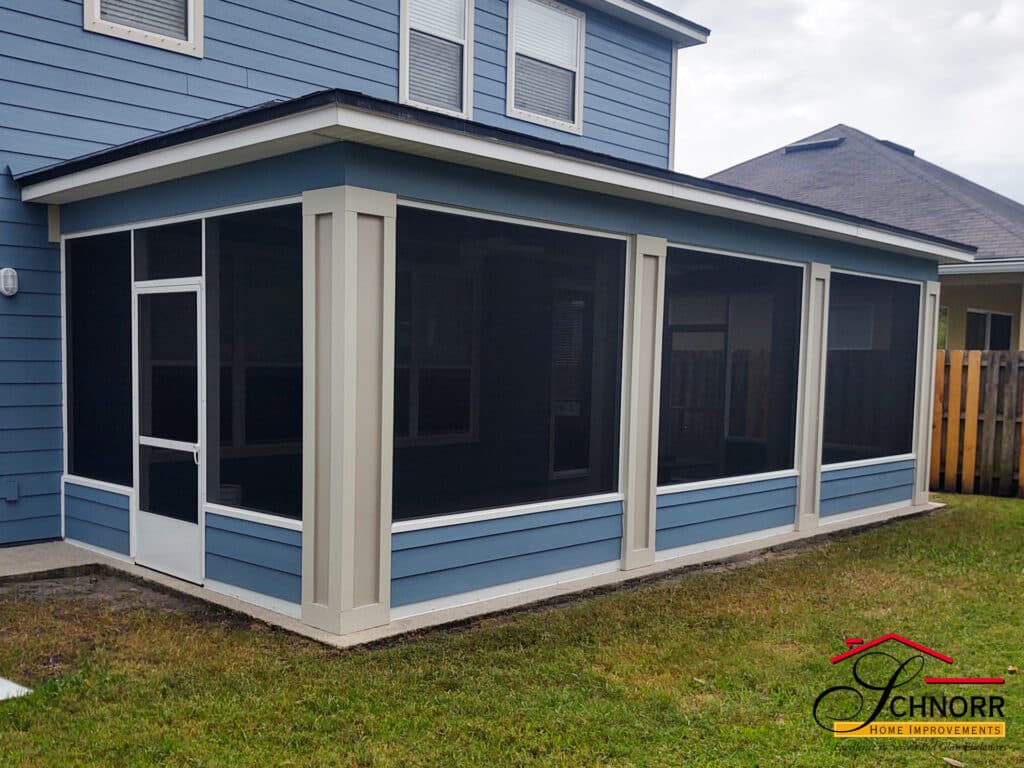
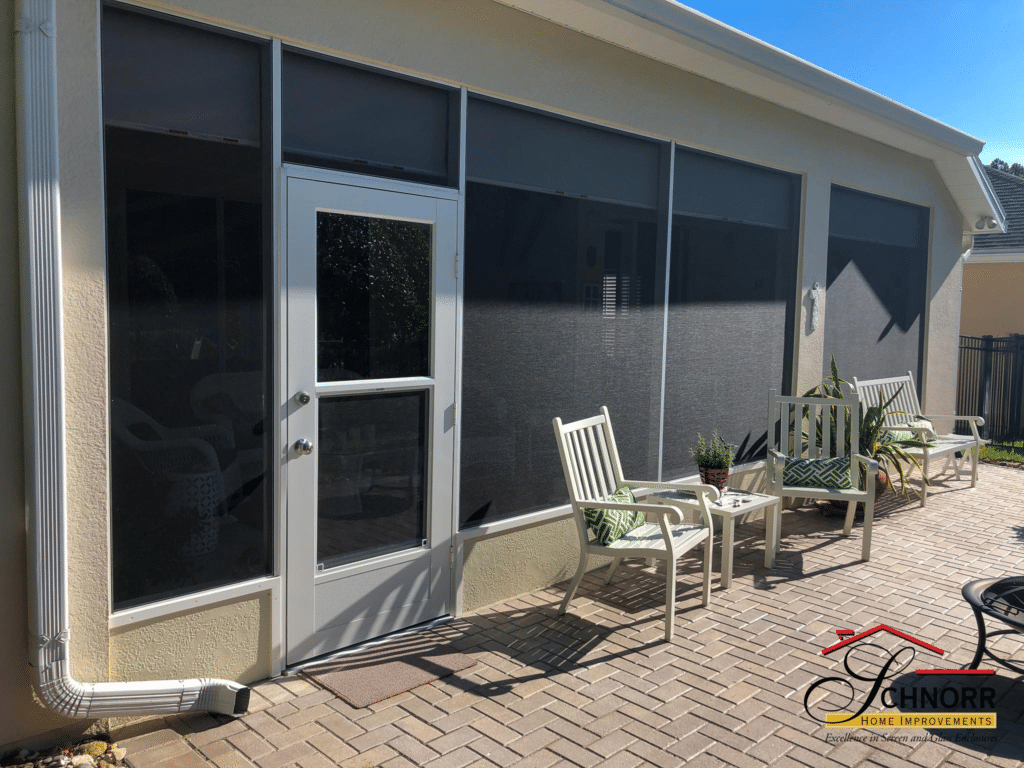
A screen door is part of a larger screened opening. In many Jacksonville homes, it provides access between the backyard and a screened patio, covered lanai, or pool enclosure.
The door screen moves with the door, while adjoining screen panels remain fixed within the enclosure framework.
This distinction is important when determining where repairs are needed.
Screened Patio and Lanai Doorways
A torn door screen may be the only damaged area in an otherwise serviceable patio or lanai enclosure.
In other cases, screening beside the door may also have loose edges, punctures, or deterioration.
Repairing the door mesh does not automatically address damaged fixed panels, even when the openings are next to one another.
For related fixed-panel problems, explore our Patio Screen Repair and Lanai Screen Repair services.
Pool Enclosure Screen Doors
Pool enclosure doors experience repeated use as family members enter and exit the pool deck or backyard.
A damaged door screen can allow insects and debris into the enclosed area, while poor closure may leave a larger opening around the doorway.
If the surrounding pool enclosure also has torn wall panels or loose roof screening, those areas should be considered separately.
Learn more about our Pool Enclosure Screen Repair services for damaged fixed-screen sections.
Why Choose Schnorr Home Improvements?
Schnorr Home Improvements has served Jacksonville and Northeast Florida since 1979, providing residential home improvements that include screen enclosures, sunrooms, pool enclosures, and outdoor living structures.
Our experience with screened residential spaces gives homeowners an established local company to contact when screening needs attention.
We understand that a screen door is more than an opening covered with mesh. Its screening, surrounding frame, and ability to close all affect how homeowners use and enjoy their enclosed outdoor areas.
When discussing your repair needs, it is helpful to identify whether the concern involves damaged mesh, an attachment problem, the door’s operation, or the adjoining enclosure.
We encourage homeowners to describe their existing door and ask about available repair options so the proposed work can be matched to the condition of the installation.
Screen Door Repair in Jacksonville and Northeast Florida
Schnorr Home Improvements serves homeowners in Jacksonville and surrounding communities throughout Northeast Florida.
Our service area includes Jacksonville Beach, Atlantic Beach, Neptune Beach, Ponte Vedra Beach, Nocatee, St. Johns, Mandarin, Julington Creek, Fruit Cove, Orange Park, and Fleming Island.
We also serve surrounding communities, including St. Augustine, Amelia Island, and Fernandina Beach.
Residential screen doors in coastal communities can experience different exposure conditions than those in more sheltered inland neighborhoods. Salt air, humidity, sunlight, windblown debris, and daily use can all affect the condition of screening and door components.
Whether your screen door provides access to a screened patio, lanai, or pool enclosure, describe the location of the property, the type of door, and the damage when requesting a consultation.
Screen Door Repair Frequently Asked Questions
Can torn screen mesh be replaced without replacing the entire screen door?
Yes. Many residential screen doors are constructed so damaged mesh can be removed and replaced while the existing frame remains in place.
This may be appropriate when the frame is sound, the screen-retaining channel is usable, and the door functions properly.
The condition of the door should be considered before deciding on a mesh-only repair. If the frame is bent or the retaining system cannot secure the replacement screening, additional evaluation may be needed.
Contact Schnorr Home Improvements to discuss your door’s condition and available screen repair options.
Why does my screen door sag, drag, or fail to close properly?
A sagging or dragging screen door may have loose hinges, worn hardware, damaged mounting points, a distorted frame, or an alignment problem.
A door that does not close completely may also have an issue involving its latch, closer, or contact with the surrounding enclosure.
These conditions are different from torn screen mesh. Replacing the screening alone will not necessarily correct them.
When requesting a consultation, explain whether the door rubs, hangs unevenly, or stops before closing so the operating concern can be considered separately from the screen damage.
What causes screen mesh to pull away from a screen door frame?
Screen mesh is commonly held inside a narrow channel using flexible retaining spline.
When the spline becomes worn, loose, incorrectly sized, or displaced, the screening may begin separating from the frame.
Deteriorating mesh, repeated pressure, improper tension, or damage to the retaining channel can contribute to the problem.
If the screen continually loosens in the same location, the condition of the spline and channel should be checked rather than simply stretching the existing mesh back into place.
Can screen door hinges, handles, latches, and closers be repaired or replaced?
Many screen door hardware components are designed to be adjustable or replaceable, but the available solution depends on the door model, component compatibility, mounting condition, and underlying problem.
A loose handle may require a different approach from a damaged hinge, misaligned latch, or malfunctioning door closer.
Hardware work is separate from mesh replacement and should not be assumed to be included in a screening service.
When contacting Schnorr Home Improvements, describe the components that appear damaged or are not working correctly. Our team can clarify which services are available for your particular door.
What screen material should I consider for a frequently used patio or lanai door?
The appropriate screen material depends on the door’s frame, how frequently the opening is used, and your preferences for airflow, visibility, insect protection, and durability.
Standard screening may be suitable for many residential doors. Other materials may offer different levels of resistance to everyday contact, but thicker or heavier screening must be compatible with the existing retaining system.
If pets frequently push against the door, mention this when discussing replacement options.
Ask Schnorr Home Improvements about available mesh products and their suitability for your door rather than assuming that one material is best for every installation.
How do I know whether my screen door needs mesh repair or complete replacement?
Begin by identifying what is actually damaged.
If the mesh has a tear but the frame is straight, the screen remains properly supported, and the door opens and closes normally, replacing the screening may be sufficient.
If the frame is distorted, the retaining channel is damaged, or several operating components are failing, broader repairs or complete door replacement may deserve consideration.
A door that sticks or fails to latch does not automatically require replacement. Determining the cause and reviewing the available repair options is the appropriate next step.
What should I check before scheduling a screen door repair consultation?
Start by identifying whether the door belongs to a screened patio, lanai, pool enclosure, or another residential screened area.
Look for tears, loose mesh, damaged spline, gaps around the perimeter, and any difficulty opening or closing the door.
Pay attention to whether the door drags, rubs against the frame, closes unevenly, or fails to latch. Note any damage to neighboring fixed-screen panels.
When contacting Schnorr Home Improvements, provide your Jacksonville-area property location, describe the affected door, and explain whether the concern involves screening, door operation, or both.
Photographs of the door and damaged areas may be useful for an initial discussion. Confirm which repair services are available for your specific installation before proceeding.
Request a Screen Door Repair Consultation in Jacksonville, FL
A torn screen door, loose mesh, or an opening that does not close properly can reduce the comfort and everyday usefulness of your screened outdoor living space.
Schnorr Home Improvements has served Jacksonville and Northeast Florida homeowners since 1979. Contact our team to discuss your existing screen door, describe the damage, and learn which repair options may be appropriate.
Call Schnorr Home Improvements at (904) 262-1517
Use the consultation form below to tell us about your screen door and the work you would like to discuss.
At Schnorr Home Improvement, we’ve built our reputation on quality workmanship, the use of the finest materials available, and superior customer service, thereby assuring our customers the best sunrooms available. If your looking for a screen repair service you have come to right place.
At Schnorr, we’ve built our reputation on quality workmanship, the use of the finest materials available, and superior customer service, thereby assuring our customers the best structure available in the marketplace. Your solution for Sunrooms Jacksonville FL.
Screen Repair Design & Construction
Schnorr Home Improvements will custom design and build your sunroom to fit your individual needs and lifestyle. We believe that each successful project depends on a partnership between ourselves and the customer. We’ll work together to match the new Sunroom to the look and style of your home.
Screen Repair Service Customer Satisfaction
Our employees have an average of 25 years of service with Schnorr Home Improvements, thus guaranteeing the most experience people in the business working on your new Sunroom. Our goal at Schnorr Home Improvements is complete customer satisfaction. The majority of our business comes from referrals and we have received hundreds of letters from satisfied customers as proof of our dedication and commitment to this goal.
Screen Repair Service Guarantee
We offer you the best and most reliable warranty in the area. Most of our products come with a five, ten or twenty year warranty direct from the manufacturer, in addition to our 1 year warranty on workmanship. Ask your salesman for more details.
We focus on custom-designing and building screen and glassed in living space of any size, any shape, and any height, to look like an integral part of your home. Please call us at 904-262-1517 or fill in the form on this page to get started.
Considering installation of a new Sunroom, Screen Enclosure, Patio Enclosure, Lanai Enclosure, Pool Enclosure, Florida Room, Patio Cover, Pergola, Screen Lanai Conversion, Glass Lanai Conversion, Outdoor Kitchen, Carport, Vinyl or Glass Windows, Lanai Screen, Replacement Windows, Awnings, Window or Door Awning, Commercial Canopy or Screen Repair you have come to the right place.
Here are Job Showcase Gallery Links
Screen Walls In Existing Lanai
Pool Enclosures & Screen Roofs
Take the time to browse our Job Showcase Gallery by clicking on the links above. Fill the form on this page to contact us or simply call (904) 262-1517.
See for yourself. Come visit our showroom or call us for a free estimate and discuss creative ideas about your next home addition.
For over 45 Years Schnorr Home Improvements Sunrooms has been the standard in beauty, durability, and, above all, dependability.
We service what we sell!
Call (904) 262-1517 or Fill In Form
Customer Testimonials
Screen Repair Services Areas Served
For Sunrooms we service all of Jacksonville, FL and surrounding areas including Jacksonville Beach, Neptune Beach, Atlantic Beach, Ponte Vedra Beach, St Augustine, St Augustine Beach, Nocatee, Ponte Vedra, Palencia, Palm Valley, Fruit Cove, Mandarin, Orange Park, Amelia Island, Fernandina Beach and surrounding areas.