

Best Screens for Pool Enclosures in Florida
- September 9, 2026
- Posted by: schnorrhome
- Category: Home Improvement Planning
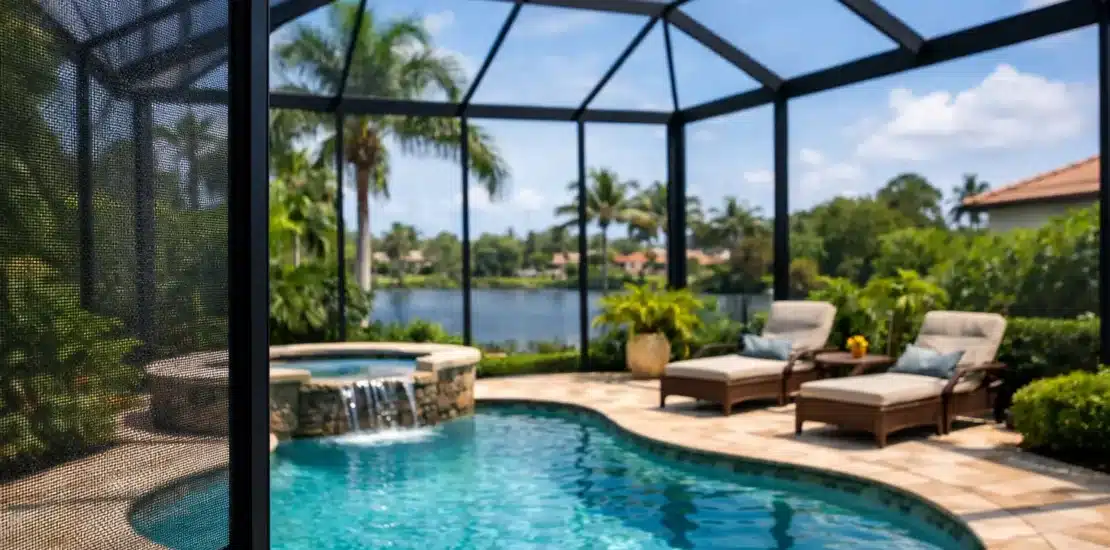
A pool enclosure can keep leaves out of the water and mosquitoes away from the deck, but the mesh choice determines how comfortable that space feels every day. The best screens for pool enclosures are not always the finest or strongest option on paper. For a Northeast Florida home, the right screen depends on insect pressure, shade, airflow, visibility, pets, tree cover, and how the pool area is actually used.
A family that spends afternoons around the pool may value open views and ventilation. A home near marshy areas, woods, or standing water may need tighter mesh to deal with no-see-ums. The goal is to select a screen that solves the problems at your property without making the enclosure feel darker, hotter, or more closed in than it needs to be.
What Makes a Pool-Enclosure Screen a Good Fit?
Screen material does more than block insects. It affects the amount of breeze that reaches the pool deck, how clearly you see the yard, how much sun enters the space, and how often the enclosure may need repair. Mesh size, strand thickness, material type, and installation quality all matter.
In Jacksonville and throughout Northeast Florida, the enclosure also has to live with high humidity, seasonal pollen, heavy rain, strong sunlight, and wind-driven debris. Nearby oak trees, palms, and pines can add another layer of wear. A screen that works well on an open, sunny lot may not be the best choice beneath a mature tree canopy or along a water-adjacent property.
The framing and anchoring system deserve the same careful planning as the screen itself. Screen mesh is not a hurricane-protection product, and it should not be expected to carry loads from severe storms. A properly designed enclosure accounts for the home connection, roof configuration, drainage, access doors, and local conditions before the mesh is installed.
Best Screens for Pool Enclosures by Need
Standard fiberglass insect screen
Standard fiberglass mesh is the familiar choice for many pool cages because it provides a practical balance of insect control, airflow, and outward visibility. It works well for homeowners who want to keep out common mosquitoes, flies, and larger debris while preserving the open character that makes a screened pool enjoyable.
This is often a sensible option for pool areas with good natural airflow and moderate insect activity. It is also usually the most economical path when replacing damaged panels across a larger enclosure. The trade-off is that standard mesh may not stop tiny biting insects, especially during the warmer, wetter parts of the year.
No-see-um screen
No-see-um screen uses a tighter weave to block much smaller insects. For homes near wetlands, wooded areas, ponds, or coastal locations where tiny biting pests are a regular nuisance, this upgrade can make a major difference in how often the pool deck is used at dawn, dusk, and after rain.
The tighter mesh has a clear trade-off: it reduces airflow and can slightly soften the view compared with a more open standard screen. It may also collect fine pollen and debris more visibly. Still, when small insects are the reason a family avoids its lanai or pool deck, the comfort improvement can outweigh those considerations.
Polyester screen
Polyester mesh is selected primarily for strength and long-term tension. Compared with traditional fiberglass, it is generally more resistant to stretching and can be a strong choice for exposed pool enclosures that receive frequent wind, falling twigs, or active use around the deck.
This material can cost more initially, but it may be worth considering where repeated screen repairs have become frustrating. Not every panel needs to use the same mesh, either. A property may benefit from stronger material on lower wall sections or wind-exposed sides while using a more open screen elsewhere to retain airflow and views.
Pet-resistant screen
Homes with dogs or cats that regularly use the pool area may need extra durability at the lower portions of the enclosure. Pet-resistant screen is made with heavier strands to better withstand paws, claws, and the occasional enthusiastic greeting at the door.
It is not indestructible, and it is typically less transparent than standard mesh. For that reason, it is often most practical as a targeted solution along the bottom panels, near pet doors, or around high-traffic exits rather than throughout the entire pool cage. This approach protects the areas most likely to be damaged without changing the look of the full enclosure.
Solar or privacy screen
Solar screen can reduce glare and help limit the intensity of afternoon sun. It may be useful on a west-facing wall that makes the pool deck uncomfortable late in the day, or along a property line where extra privacy would make outdoor dining and lounging feel more relaxed.
Because it blocks more light and affects sightlines, solar or privacy mesh should be used thoughtfully. Covering every wall can make a pool enclosure feel noticeably darker and more enclosed. A better design may place it only on the side with the strongest sun exposure, while leaving other elevations more open for daylight and cross-ventilation.
Mesh Selection Should Follow the Layout
Choosing a screen by material alone can overlook the real issue. Before making a recommendation, it helps to look at where sunlight enters, which way prevailing breezes move through the yard, and where debris tends to collect. A pool enclosure beside a dense hedge has different needs than one that opens toward a wide backyard or preserve view.
The roof section matters as well. Roof panels receive direct sun, rain, and falling debris, and they are harder to access for future service. Wall panels near a door or grill station often see more contact and may benefit from a more durable mesh. If the enclosure includes a covered patio, the transition between the covered section and open pool deck should be planned for airflow rather than treated as an afterthought.
Drainage is another practical concern. Screen does not replace proper deck slope, gutter planning, or roof runoff management. Water that repeatedly washes across a pool deck can carry dirt and leaf matter into the enclosure, create cleanup issues, and make the space less pleasant after a storm.
Visibility, Airflow, and Bug Protection: The Main Trade-Off
There is no single screen that offers maximum visibility, maximum airflow, maximum strength, maximum shade, and complete insect control. The best choice comes from deciding which two or three outcomes matter most for your household.
If your primary concern is keeping the pool open to the yard and catching the evening breeze, a standard mesh or an open-view approach may be right. If you are constantly swatting tiny insects during outdoor meals, no-see-um mesh is likely the more useful investment. If a dog has damaged multiple lower panels, reinforced pet-resistant mesh in those locations may solve a focused problem more effectively than replacing every panel with heavier material.
For many homeowners, a mixed-screen design delivers the best result. Stronger mesh can be installed where impact is likely, tighter mesh where insects are worst, and more open material where the view is a priority. This is one reason site-specific planning is more valuable than a one-size-fits-all enclosure package.
When Screen Repair Is Enough
A torn panel does not automatically mean the entire pool enclosure needs rescreening. Isolated damage from a branch, pet, or accidental impact can often be repaired with a matching material. Repairing a single panel is especially reasonable when the remaining screens still hold tension, show no significant brittleness, and continue to meet your needs.
A broader rescreen may be the better investment when multiple panels are faded, loose, torn, or difficult to clean, or when the current mesh no longer matches how you use the space. It is also a good time to address doors that do not close properly, worn hardware, gaps near framing, and areas where water or debris enters the enclosure.
Schnorr Home Improvements has served Northeast Florida homeowners since 1979, with planning that considers the pool deck, existing roofline, exposure, access, and the way each household wants to use its outdoor space. The screen material is one part of a larger enclosure decision, not a standalone detail.
A comfortable pool area should let you enjoy the view, move air through the space, and spend less time chasing debris or insects. Start by identifying what most often interrupts your time outside – tiny pests, harsh afternoon glare, damaged lower panels, or constant leaf cleanup – and let that daily reality guide the screen choice.