
Impact Versus Insulated Windows for Florida Homes
- November 13, 2026
- Posted by: schnorrhome
- Category: Home Improvement Planning
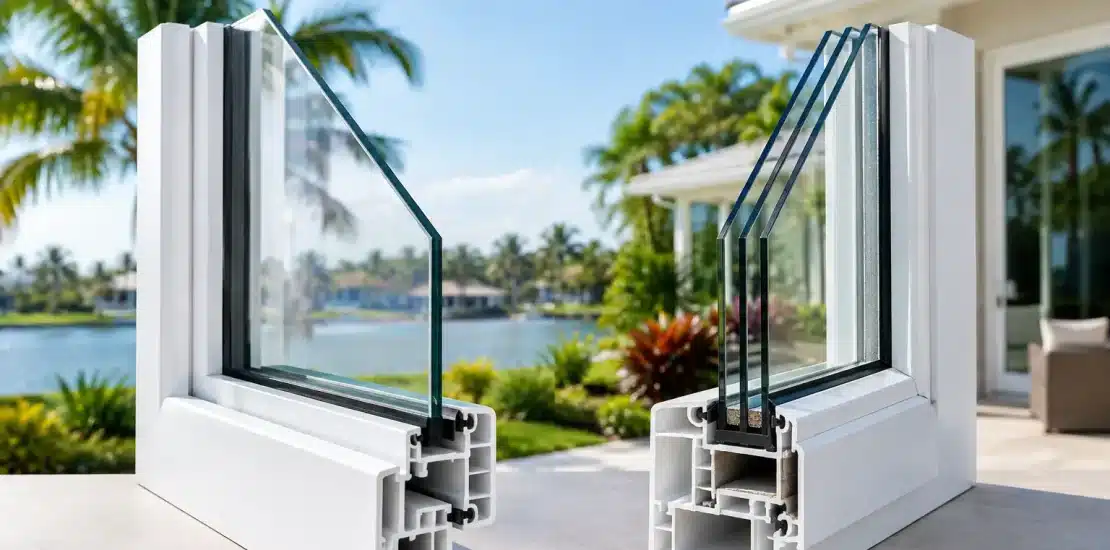
A west-facing sunroom can be bright and inviting in the morning, then feel noticeably warmer by midafternoon. When homeowners compare impact versus insulated windows, that daily experience is often just as important as storm season. The two terms describe different benefits, and the right choice depends on where the windows will be installed, how the room will be used, and the level of weather protection the home needs.
For Jacksonville and Northeast Florida homes, windows must contend with intense sun, heavy rain, humidity, wind-driven debris, and occasional tropical weather. A thoughtful window plan considers all of those conditions rather than treating glass as a single, one-size-fits-all material choice.
Impact Versus Insulated Windows: The Core Difference
Impact windows are designed primarily for resistance to windborne debris and pressure changes during severe weather. Their glass is typically laminated, meaning a durable interlayer holds the glass together if it breaks. Instead of opening into sharp fragments, damaged glass is more likely to remain adhered to that inner layer. The window frame, hardware, anchoring, and overall tested system matter just as much as the glass itself.
Insulated windows, often called insulated glass units or double-pane windows, are designed primarily to reduce heat transfer. They use two panes of glass separated by a sealed airspace or gas-filled space. That assembly helps slow the movement of outdoor heat into an air-conditioned room and can reduce the temperature difference homeowners feel near the glass.
These are not competing categories in every case. A window can be impact-rated and insulated at the same time. It can also be one without the other. That distinction is where many window decisions become clearer.
A standard double-pane insulated window may improve comfort and energy performance but may not provide the protection required for a high-wind or windborne-debris location. Conversely, an impact-rated glass system may provide valuable storm protection, yet its insulation level will vary based on the particular glass package. The label alone does not tell the whole story.
Start With How the Space Will Be Used
A replacement window in a conditioned bedroom has different priorities than the windows in a glass enclosure or a new sunroom. The best decision starts with how often the space is used and what comfort level you expect throughout the year.
For a room that is cooled every day, insulated glass is often a central consideration. It can help limit solar heat gain, reduce strain on the HVAC system, and make the room more comfortable near large window openings. In a Florida room used for reading, dining, hobbies, or family gatherings, that difference can be significant.
If the opening is exposed to severe weather, near the coast, or subject to local code requirements for impact protection, impact-rated windows may be the appropriate starting point. Homeowners in coastal and high-wind areas should not assume a window is compliant based on its appearance or glass thickness. The complete system must be selected and installed for the project’s location and applicable requirements.
For an unconditioned screen room or a seasonal enclosure, conventional windows or alternative enclosure materials may make more practical sense. Adding high-performance glass where it is not needed can increase cost without delivering a proportionate everyday benefit. The goal is not to specify the most features possible. It is to build a space that works well for its intended use.
Comfort Depends on More Than the Number of Panes
Two panes of glass alone do not guarantee a cooler, more comfortable room. In Northeast Florida, solar exposure can be as influential as insulation. A large wall of glass facing west or southwest receives a very different afternoon heat load than a shaded north-facing wall.
Glass coatings are a major part of the equation. Low-emissivity, or Low-E, coatings can be selected to help manage solar heat while preserving natural light. Tinted glass, shading systems, roof overhangs, and strategically placed solid wall sections can also affect how a room performs. A good design balances daylight with protection from glare and overheating.
Frame material and installation quality matter, too. Even high-quality insulated glass can underperform if the frame is poorly fitted, flashing is incomplete, or water management around the opening is overlooked. On a sunroom or patio conversion, the connection between the new structure and the existing home deserves careful planning for drainage, roof runoff, and long-term weather resistance.
Ventilation is another consideration that is easy to miss during window selection. Operable windows can help bring in fresh air during mild weather, but their location should support cross-breezes rather than simply adding openings at random. In a glass-heavy room, a combination of fixed windows for views and operable windows for airflow often creates a more useful result.
When Impact Windows Are Worth the Investment
Impact-rated windows can be a sensible investment when storm protection is a clear priority. They may help reduce the risk of wind-driven debris breaching the building envelope during severe weather. That protection can be especially meaningful for homes in exposed locations and for rooms with broad expanses of glass.
They may also provide secondary benefits, such as reduced outside noise and an added layer of security. Those benefits vary by product, glass configuration, and installation, so they should be viewed as possible advantages rather than guarantees.
The trade-off is cost. Impact systems generally cost more than non-impact alternatives because they use specialized glass, stronger components, and tested construction details. For homeowners planning a sunroom or replacement-window project, it is worth deciding whether that premium supports the home’s location, local requirements, insurance considerations, and peace of mind.
Impact glass does not eliminate the need for sound construction around it. Roof attachments, structural posts, wall connections, drainage paths, and anchoring all play a role in how an addition or enclosure handles Florida weather. A strong window system is most effective when it is part of a well-planned structure.
When Insulated Windows Should Lead the Decision
If your primary concern is daily indoor comfort, insulated glass should receive close attention. This is often true for air-conditioned sunrooms, converted patios, home offices, and additions where homeowners want to use the room during the hottest months without constantly adjusting the thermostat.
For these spaces, ask more detailed questions than simply whether the window is double-pane. Consider the glass coating, solar heat gain characteristics, frame design, orientation, and amount of glass on each wall. A window package that performs well on a shaded elevation may not be the best fit for a bright, exposed wall facing the afternoon sun.
Insulated windows can also help reduce interior condensation under certain conditions, although indoor humidity, air conditioning settings, and ventilation still affect moisture behavior. In Florida’s humid climate, keeping conditioned air separated from warm, moist outdoor air requires careful attention to the full construction assembly, not just the glass.
A Combined Approach Often Makes the Most Sense
For many Northeast Florida projects, the practical answer is impact-rated insulated windows with glass selected for solar control. This approach addresses two separate needs: protection during severe weather and better comfort during ordinary hot, sunny days.
That does not mean every opening needs the same specification. A project may benefit from higher-performance glass on the most exposed wall, more operable units where airflow matters, and fixed units where the priority is a clear view. Window placement can be tailored around a pool view, a patio door, furniture layout, privacy from neighboring homes, and the home’s roofline.
This is especially relevant for custom sunrooms and glass enclosures. The glass area may be much larger than in a typical room, so small decisions about orientation, shading, and window type can have a noticeable effect on how the space feels at 3 p.m. in July.
Questions to Settle Before Choosing Windows
Before finalizing a window package, identify whether the room will be conditioned year-round, how much direct sun each wall receives, and whether the location calls for impact protection. Also consider whether you want a quiet retreat, an entertaining area, a poolside transition space, or a room that opens frequently for fresh air.
It helps to look beyond the window itself. Ask how the new windows will integrate with the roof design, wall system, door openings, existing drainage, and exterior architecture. A patio conversion should feel connected to the home, not added onto as an afterthought.
Since 1979, Schnorr Home Improvements has approached sunrooms, enclosures, and window projects around those site-specific details. The right choice is not simply impact or insulated. It is a window and glass plan that suits your home, your exposure to Florida weather, and the way your family wants to use the space.
A clear view is valuable, but a room you can comfortably enjoy through changing weather is better. Plan the glass around the life you want the space to support, then let protection, insulation, shade, and airflow work together.