Can Screen Roofs Withstand Storms in Florida?
- November 21, 2026
- Posted by: schnorrhome
- Category: Home Improvement Planning
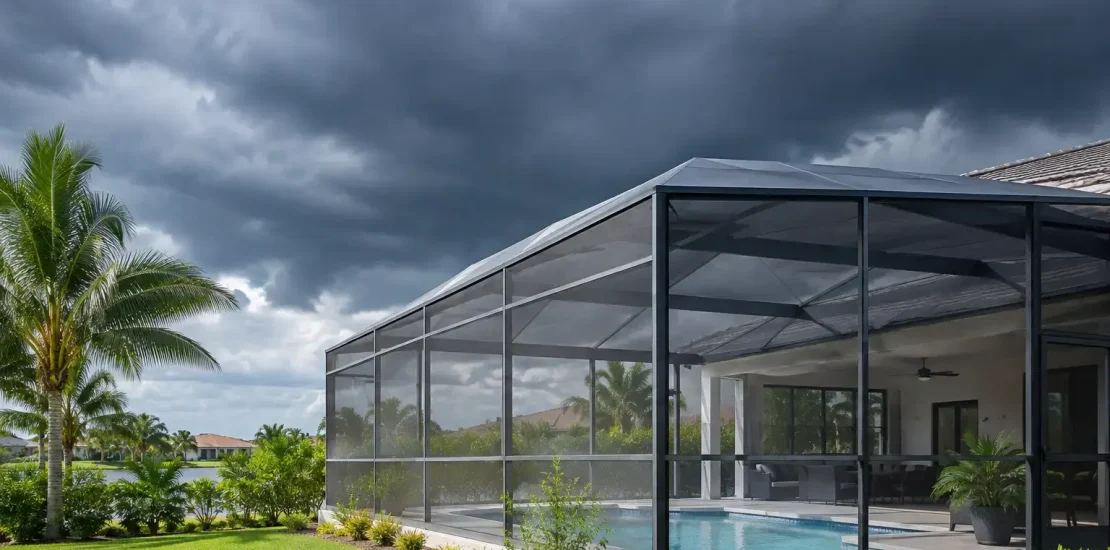
A screened patio can make a Jacksonville backyard far more usable, but it is still exposed to the weather that moves through Northeast Florida. So, can screen roofs withstand storms? A properly designed and installed screen enclosure roof can withstand the wind, rain, and debris expected for its location, but its performance depends on the complete system – not the screen material alone.
Heavy summer downpours, tropical systems, falling limbs, coastal air, and high wind events place different demands on an enclosure. The right answer begins with an honest assessment of the home, the existing patio or pool deck, the roof connection, and the level of exposure on the property.
What a Screen Roof Is Designed to Handle
A screen roof is usually part of an aluminum-framed screen enclosure, such as a pool enclosure, lanai enclosure, screened porch, or patio screen room. Its purpose is to create an open-air living area while keeping out mosquitoes, leaves, and much of the windblown debris that can make an uncovered patio or pool deck difficult to enjoy.
The roof portion may use screen panels, solid insulated panels, or a combination of both. Screened roof sections allow heat to rise and air to circulate, which can be especially valuable during Florida’s humid months. Solid roof panels provide greater shade and rain protection. Each choice affects not only comfort, but also how wind and water move around the structure.
A well-built enclosure is designed as a connected assembly. The posts, beams, fasteners, footings or deck connections, roof framing, and screen panels all work together. If one part is undersized, deteriorated, or poorly attached, the enclosure may be more vulnerable even if the rest looks sound.
Can Screen Roofs Withstand Storms and High Winds?
They can, provided they are designed for the site and maintained in good condition. However, “withstand” does not mean a screen roof is invulnerable to every storm. No residential exterior structure should be expected to resist a direct strike from a large falling tree or the most extreme hurricane conditions without damage.
During a typical thunderstorm, a properly installed enclosure should shed rain, remain stable, and keep ordinary debris out of the living area. During stronger wind events, the frame and its connections become increasingly important. Wind creates pressure on the enclosure and can also pull upward on roof sections. The structure needs an appropriate load path that transfers those forces through the framing and into a properly supported foundation, slab, deck, or home connection.
Screen itself is intentionally lightweight. It is not meant to serve as a structural wind barrier. In fact, screened areas can allow some air to pass through rather than acting like a solid wall. But torn, loose, or aging screen can flap in the wind, pull at spline channels, and allow debris inside. A small repair before storm season can prevent a larger issue later.
For Northeast Florida homeowners, wind exposure varies considerably. An enclosure sheltered by the home and mature landscaping may face different conditions than one beside an open pool, on a waterfront property, or near the beach. A contractor should consider those conditions before recommending a roof style, span, framing layout, or material selection.
The existing structure matters
Many enclosure problems begin before the first aluminum member is installed. An older concrete slab may have cracks, inadequate thickness at attachment points, or drainage issues. A wood deck may need structural review before it supports an enclosure. If a new screen room attaches to the house, the connection must work with the home’s roofline and exterior construction rather than simply filling an open space.
This is why a site-specific plan matters more than a one-size-fits-all enclosure package. The goal is not only to create shade or insect protection. It is to create an addition that fits the property and has a sound structural basis.
Roof Design Affects Storm Performance
The roof design homeowners choose has practical consequences during heavy rain and wind. A screen roof that looks appropriate on one home may not be the best option for another.
A gable-style enclosure can create an open, airy feel and complement homes with taller rooflines. Its shape can also help direct rainwater away from the center of the enclosure when it is planned with appropriate pitch and drainage. A studio-style roof is often a strong fit where a simpler, single-slope design connects cleanly to the home.
The important consideration is not which style is universally stronger. It is whether the roof pitch, span, attachment method, framing, and drainage plan are suited to the specific space. Low areas where water collects, undersized gutters, or roof runoff directed onto the enclosure can create problems during the kind of intense rain Jacksonville sees every summer.
Solid patio covers and insulated roof panels deserve separate consideration. They offer meaningful protection from rain and direct sun, but because they present a more solid surface, their framing and connections need to be planned accordingly. A combination of a covered section and screened section can be a practical choice for homeowners who want a dry dining area without giving up airflow across the rest of the patio.
Common Weak Points After a Storm
Storm damage is not always dramatic. A frame can remain standing while smaller issues allow water, debris, or future damage to develop. After severe weather, look over the enclosure from the ground and from inside the space.
Pay attention to these signs:
- Screen panels that are ripped, sagging, or pulling out of their channels
- Loose fasteners, shifted trim, bent framing, or separation where the enclosure meets the home
- Standing water near posts, at the slab edge, or around a pool deck
- Gutters that overflow, disconnect, or direct water onto the enclosure roof
- Tree branches resting on the roof or debris caught in framing members
Avoid climbing on a screen enclosure roof or attempting to straighten structural members yourself. Aluminum framing can be damaged further by improper force, and a compromised roof may not safely support weight. A qualified inspection can determine whether the work is limited to screen repair or whether the framing, anchors, or drainage components need attention.
How to Prepare a Screen Enclosure Before Storm Season
Routine maintenance gives homeowners the best opportunity to catch minor concerns early. Start by keeping gutters and roof drainage paths clear. Water should move away from the house and enclosure, not collect along attachment points or near the base of posts.
Trim back overhanging limbs that could scrape screens or fall onto the roof. Check doors for smooth operation and secure latches. If you have removable furniture, umbrellas, planters, or lightweight outdoor accessories inside the enclosure, secure or bring them in when a strong storm is approaching. Those items can damage screens and frames when wind pushes them around.
It is also wise to inspect older screen panels. Florida sun, moisture, and airborne salt near coastal communities can gradually affect materials and fasteners. Re-screening a few worn panels is often simpler and more economical than waiting until a storm turns a small weakness into widespread damage.
When Repair Is Enough and When Replacement Makes Sense
A single damaged screen panel, worn door hardware, or isolated drainage concern may be a straightforward repair. If the enclosure frame is stable and the original design still meets the family’s needs, repair can restore function without changing the overall space.
Replacement or a more substantial redesign may make more sense when the enclosure has repeated screen failures, visible corrosion, bent structural members, outdated attachment details, or a roof configuration that does not manage water well. It can also be the right time to rethink how the family uses the area. A patio that needs more shade, a pool deck that collects leaves, or a lanai that feels too exposed may benefit from a different roof mix, improved access, or a larger covered section.
Since 1979, Schnorr Home Improvements has helped homeowners plan outdoor living improvements around the realities of Northeast Florida properties. The best enclosure is not simply the one that looks right on installation day. It is the one that accounts for sunlight, drainage, ventilation, rooflines, wind exposure, and how the household plans to use the space over time.
Before the next storm season arrives, a careful look at your enclosure can provide both practical protection and peace of mind. Addressing a loose screen, blocked gutter, aging fastener, or questionable drainage path now helps keep your patio, lanai, or pool area ready for the days when the weather clears and outdoor living resumes.