
Pergola Versus Patio Cover: Which Fits Your Yard?
- November 7, 2026
- Posted by: schnorrhome
- Category: Home Improvement Planning
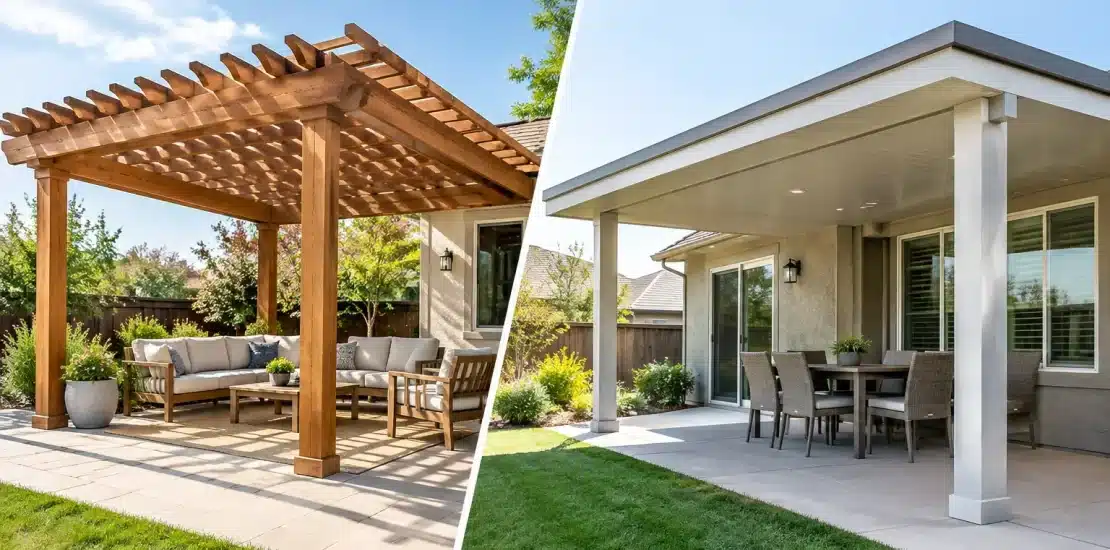
A backyard structure can change how often you use a patio, but the right choice depends on what is keeping you indoors now. When weighing a pergola versus patio cover, the central question is simple: Do you want filtered sun and an open-air feel, or dependable protection from Florida heat and rain?
For Jacksonville-area homeowners, that difference matters. A structure that looks appealing in a photo may not provide enough shade for an afternoon meal, keep cushions dry during a summer storm, or make a west-facing patio more comfortable. A good design begins with how you want to use the space, then considers your home’s roofline, sunlight exposure, drainage, and access.
Pergola Versus Patio Cover: The Main Difference
A pergola is an open framework, typically built with vertical posts and overhead beams or slats. It creates definition, architectural interest, and partial shade while retaining an open connection to the sky. Depending on the slat spacing and orientation, sunlight still reaches the patio throughout the day.
A patio cover has a solid roof. It is usually attached to the home, though freestanding designs are possible, and it provides substantially more reliable overhead shelter from direct sun and rain. The roof may be finished to coordinate with the house, creating the look and function of a true outdoor extension.
Neither option is automatically better. A pergola is often the right fit for a homeowner who values an airy garden setting and plans to use the area primarily in milder weather. A patio cover is generally the stronger choice for someone who wants to use a patio more consistently through Northeast Florida’s intense sun, sudden rain, and humid summer conditions.
When a Pergola Makes Sense
Pergolas work well when the goal is to make an outdoor area feel intentional without closing it in. They can frame a dining table, create a transition between a house and pool deck, or give a bare patio a stronger visual focal point. They are especially effective over areas that already receive some natural shade from mature trees or the home’s orientation.
Because a pergola remains open overhead, it allows warmth to escape rather than collecting beneath a solid roof. That can be pleasant on a breezy day, and the structure can support climbing plants, hanging lights, or fabric accents. It also preserves a view of the sky that some homeowners prefer near gardens or open yards.
The trade-off is coverage. A traditional fixed-slat pergola does not stop rain, and the shade shifts as the sun moves. On an exposed south- or west-facing patio, narrow slats may offer more visual character than meaningful relief from afternoon heat. Adding a canopy or retractable shade can improve comfort, but those additions should be selected with wind, drainage, maintenance, and anchoring in mind.
A pergola may be a practical fit if your patio is used mainly for morning coffee, occasional entertaining, or landscaping enhancement. It is less likely to solve the problem if you avoid the area because it becomes too hot, too wet, or unusable after every passing shower.
Pergola placement affects comfort
The same pergola can perform very differently depending on its orientation. Slats running one direction may block more of the high midday sun while allowing lower-angle morning or evening light through. The patio’s relationship to the home also matters. A wall can provide shade for part of the day, while a wide-open pool deck may need a more deliberate solution.
Before selecting materials or colors, evaluate where the sun lands during the hours your family is most likely to use the space. This is one reason site-specific planning is more useful than choosing a structure based on appearance alone.
When a Patio Cover Is the Better Choice
A patio cover is designed for homeowners who want predictable shade and overhead weather protection. It can make an exposed slab more useful for outdoor dining, grilling, reading, children’s activities, or relaxing near a pool. A solid roof also helps protect outdoor furnishings from direct sun and rain, though wind-driven rain can still reach an open-sided patio.
For many Florida homes, the greatest benefit is consistency. You do not have to cancel plans because a midday shower moves through, and you have a shaded place to step outside during the hottest part of the day. A covered patio can also reduce glare at doors and adjacent windows while creating a more comfortable transition from indoor rooms to the backyard.
Roof design has a major effect on the finished result. A shed-style cover slopes away from the house and often works well where a clean, simple connection is needed. A gable-style cover can create a more open feeling overhead and may better complement certain rooflines. The best option depends on attachment height, drainage paths, nearby windows, and the architectural proportions of the home.
Plan for rain management, not just shade
In Northeast Florida, a patio cover should be planned around water as carefully as sunlight. The roof needs an appropriate slope, and gutters and downspouts should direct runoff away from the foundation, patio, walkways, and neighboring property. Poor drainage can leave standing water where people enter and exit the home or wash soil away from landscaping.
Structural connection is equally important. The cover must tie into the house appropriately, with proper flashing at the connection point to help prevent water intrusion. Posts, footings, and materials should be selected for the site’s conditions and the cover’s size. These are construction details homeowners may not see after completion, but they influence longevity and performance.
Consider How You May Use the Space Later
A patio cover can be a useful first step toward a more protected outdoor room. Some homeowners eventually decide to add screens to reduce mosquitoes and debris, or to convert the area into a screen room, glass enclosure, or sunroom. Considering that possibility during the original design can help with roof height, layout, electrical planning, and door placement.
A pergola can also be part of a larger outdoor plan, particularly when paired with landscaping, a fire feature, or an outdoor kitchen. However, its open roof generally offers fewer direct paths to enclosure than a solid-roof structure. If your long-term goal is a fully screened or enclosed living area, starting with a patio cover may avoid rebuilding portions of the project later.
Think about circulation, too. A structure should not block the route from the kitchen to the grill, reduce clear access around a pool, or make it difficult to maintain landscaping. The most successful designs improve the way people move through the property, rather than simply occupying unused square footage.
Appearance, Maintenance, and Budget Considerations
A pergola often uses less roofing material and may be a more modest project depending on its size, material, and structural requirements. Yet cost should be compared against the level of comfort you expect. A lower initial investment does not provide better value if the patio still sits empty during much of the year.
Patio covers typically involve more structural planning, roofing, drainage work, and integration with the home. They may have a higher project cost, but they also deliver a different level of daily usability. Material choices, finish details, ceiling options, lighting, and fans can further influence both investment and enjoyment.
Maintenance varies by material and design. Open pergola beams can collect leaves and pollen, while a solid patio cover requires periodic gutter cleaning and roof inspections. In coastal and humid areas, finishes and fasteners should be selected for durability, and homeowners should expect routine cleaning to manage mildew, salt air, and seasonal debris.
Start With the Problem You Want to Solve
If you picture an open outdoor retreat with dappled light and a strong landscape presence, a pergola may be the right architectural addition. If you want a dependable place to gather when the sun is harsh or rain is nearby, a patio cover will usually provide more practical protection.
The best answer is often found by standing on the patio at the time you normally want to use it. Notice the sun angle, where water drains after rain, which views you want to preserve, and how people move between the home and yard. Since 1979, Schnorr Home Improvements has helped homeowners turn those site-specific observations into outdoor spaces designed for the way they actually live.