
Patio Drainage Solutions for Jacksonville Homes
- October 26, 2026
- Posted by: schnorrhome
- Category: Home Improvement Planning
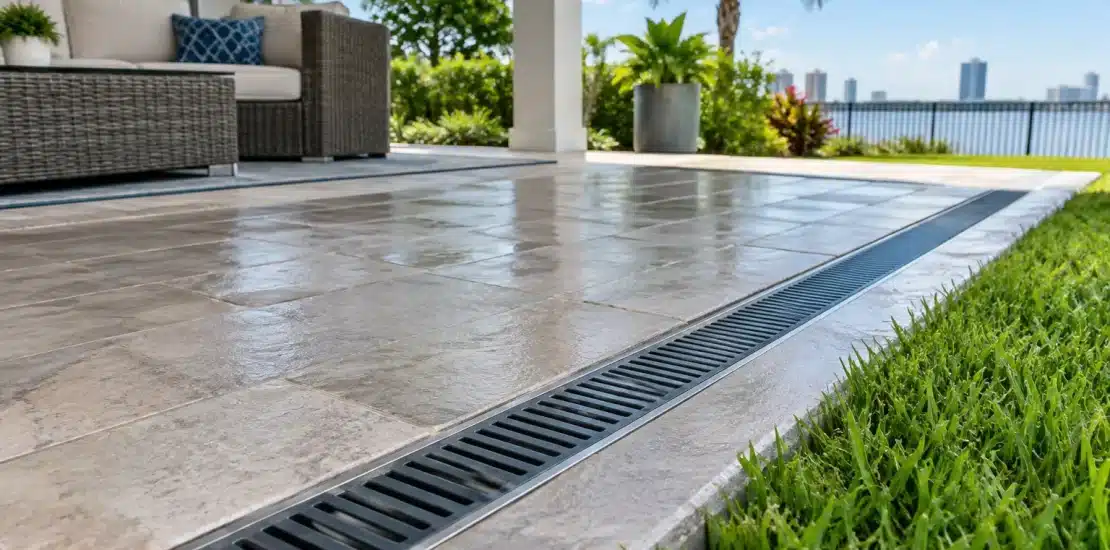
A patio can look level, clean, and ready for relaxing right up until a Northeast Florida downpour reveals where the water actually wants to go. Effective patio drainage is what keeps rainwater from collecting at the door, washing soil away from the slab, pooling inside a screen enclosure, or moving toward the home’s foundation. It is not an afterthought to a patio cover, enclosure, or conversion. It is part of making that outdoor space comfortable and usable in every season.
Jacksonville-area properties regularly deal with intense rain, high humidity, sandy soils, established landscaping, and roof runoff that can concentrate a surprising amount of water in one location. The right solution depends on the existing grade, rooflines, patio material, access points, and how the space will be used.
Why Patio Drainage Deserves Early Planning
Standing water does more than make a patio inconvenient after a storm. When water remains against the house or repeatedly saturates the edges of a slab, it can contribute to soil movement, staining, mildew growth, and deterioration of nearby finishes. On a screened patio or pool enclosure, puddles can also carry debris onto the deck and create slick walking areas.
Drainage becomes especially important when a homeowner adds a roofed structure. A patio cover, sunroom, or gable enclosure changes how rain leaves the roof. Water that once dispersed across a broad roof area may now be directed into gutters and downspouts at specific points. Without a planned discharge path, that concentrated runoff can overwhelm an otherwise well-performing patio.
This does not mean every patio needs an elaborate drainage system. A small uncovered concrete slab with adequate slope and open landscape nearby may need only minor grading adjustments. A low-lying patio beside a pool deck, however, may require a more coordinated approach involving surface drains, downspout routing, and landscape drainage.
Start With Slope and Water Flow
The most dependable drainage measure is also one of the least visible: proper slope. Patios should direct surface water away from the home rather than toward exterior walls, thresholds, or foundation areas. Even a slight, consistent pitch can make the difference between rainwater clearing naturally and lingering along the house.
During a site evaluation, it helps to identify where water collects after a typical storm. Look for dark staining on concrete, algae or mildew near walls, washed-out mulch, settling pavers, or a strip of grass that stays wet longer than the rest of the yard. These are useful clues, but they do not always show the full picture. Roof runoff, neighboring grades, and buried utility locations can affect the available drainage options.
For existing slabs, correcting slope is not always simple. Raising or resurfacing a patio may be appropriate in some cases, while others are better served by a channel drain placed along a low edge. The right choice depends on whether the issue is isolated to the patio surface or caused by the broader property grade.
Thresholds Need Special Attention
The point where a patio meets a door, sunroom wall, or house wall deserves careful planning. This area needs to remain accessible and weather-resistant while preventing rainwater from moving inside. If a patio is too high relative to the threshold, simply adding material to improve slope can create a new problem.
A linear or channel drain may be considered when the finished surface cannot be pitched far enough away from the home. These drains collect water at a low point and move it through a connected pipe to an appropriate discharge location. They can be practical, but they need to be sized, installed, and maintained correctly. A drain that fills with leaves, pine needles, or roof grit cannot do its job during a heavy storm.
Managing Roof Runoff Around Patios and Enclosures
Roof runoff is often the largest source of water around an outdoor living area. A new patio cover or enclosure should include a plan for gutters and downspouts that fits the home, not merely a place to send water out of sight.
Downspouts should discharge away from the foundation and avoid dumping water directly onto a patio slab, pool deck, walkway, or planting bed that cannot absorb the volume. In some yards, extensions can carry water to a lower, open landscape area. In others, a buried drain line may be a better fit because it keeps the route clear and reduces erosion near the structure.
The discharge point matters as much as the gutter system. Directing water toward a fence line, a neighboring property, or a low corner of the yard can shift the problem rather than solve it. Northeast Florida’s frequent hard rains can exceed what compacted soil or a narrow mulch bed can absorb in a short period. Drainage planning should consider where water will go during the heaviest storms, not only during a light shower.
Common Patio Drainage Solutions
A complete drainage design may combine several measures rather than relying on one product. The goal is to manage both surface water and roof runoff in a way that suits the property.
- Grading adjustments reshape surrounding soil so rainwater moves away from the patio and home. This is often the first option when there is enough room and elevation to create a natural path.
- Channel drains collect water along a patio edge, doorway, or transition between surfaces. They are useful where a slab has limited slope or where water crosses a walking surface.
- Catch basins and underground piping collect runoff from downspouts or low landscape areas and carry it to a suitable outlet. These systems can keep water from repeatedly saturating one small area.
- Swales and landscape drainage features use shallow, graded pathways to guide water through the yard. They can work well on larger properties when designed to complement the overall site grade.
- Gutter and downspout improvements control water at its source. Properly placed downspouts can reduce the demand on patio drains and protect enclosure footings, landscaping, and walkways.
Each option has trade-offs. Underground piping offers a clean appearance but requires thoughtful routing and access for maintenance. Surface swales can be effective and straightforward, but they need enough yard space and must fit the landscape plan. Channel drains address water at the patio surface, yet they should not be used to compensate for a larger grading problem without understanding where the collected water will ultimately discharge.
Drainage Considerations for Patio Conversions
Converting an existing patio into a sunroom, Florida room, or screened enclosure changes the way the area performs in wet weather. An open patio may have tolerated occasional puddling because rain and wind eventually dried the surface. Once enclosed, water at the perimeter can affect entry areas, wall connections, flooring choices, and the long-term condition of the new living space.
Before construction, the patio slab should be assessed for condition, elevation, cracks, and drainage behavior. The existing roofline should also be considered because the new structure may connect to the home or introduce new roof planes. Window and door placement can influence how water is shed and where access is needed for future gutter cleaning.
A screen enclosure has different needs from a conditioned sunroom, but neither should be planned separately from drainage. Screens provide airflow and insect protection, yet leaves and wind-driven rain can still enter. A solid-roof sunroom provides greater weather protection, but it also creates a more defined runoff pattern. In both cases, the surrounding grade and drainage route need to support the finished space.
Signs It Is Time to Address a Drainage Problem
Homeowners often notice drainage trouble gradually. Water may begin reaching the patio door during severe storms, or a previously dry corner may stay damp after every rainfall. Rust marks near enclosure components, recurring mildew, loose pavers, or mulch that washes out after storms are also worth investigating.
More urgent signs include water entering the home, soil pulling away from the foundation, visible slab settlement, or persistent pooling against exterior walls. Those conditions call for an evaluation before adding new patio features, installing flooring, or enclosing the space. Finishing a patio without correcting its water path can make later repairs more disruptive.
Build for the Weather Your Property Actually Gets
A well-designed patio should not require homeowners to watch every storm forecast or move furniture away from puddles. It should shed water predictably, keep roof runoff under control, and support the way the family uses the space – whether that means poolside gatherings, a covered dining area, or a quiet enclosed room with views of the yard.
Since 1979, Schnorr Home Improvements has approached outdoor projects with the understanding that roof configuration, sunlight, airflow, access, and drainage all affect the finished result. A site-specific conversation before construction can help ensure the patio you improve today remains comfortable, protected, and practical after the next heavy Florida rain.