
How to Stop Porch Leaks Before Florida Rain
- November 9, 2026
- Posted by: schnorrhome
- Category: Home Improvement Planning
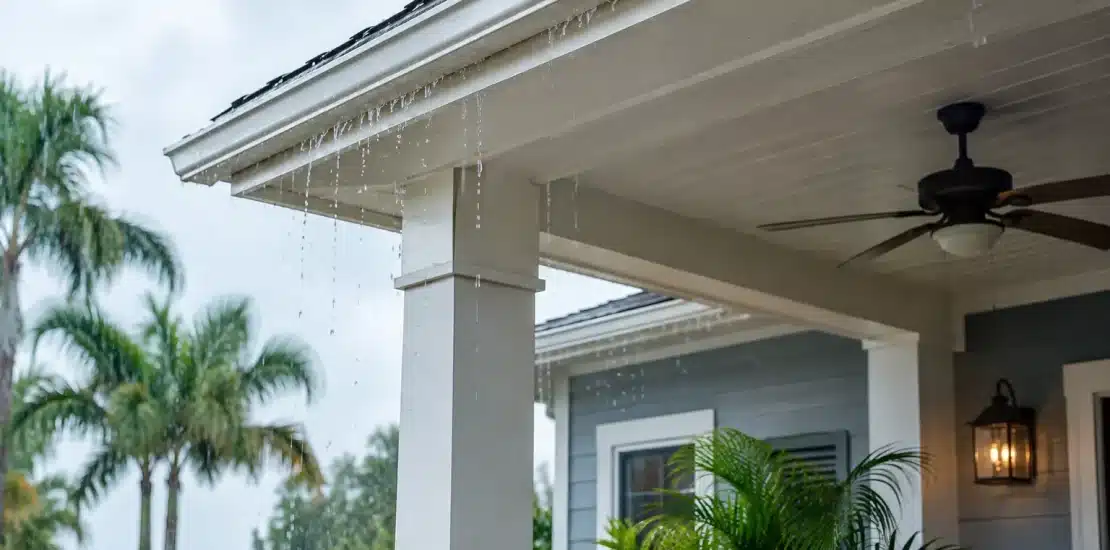
A porch leak rarely begins where the water finally appears. A wet ceiling corner, damp wall, or puddle along the slab may be the last stop in a much longer water path. For homeowners asking how to stop porch leaks, the most effective first step is not applying more caulk. It is finding where rainwater enters, where it is supposed to drain, and what is allowing it to travel into the porch structure.
In Jacksonville and throughout Northeast Florida, a porch can handle months of sun and humidity, then face wind-driven rain that tests every roof connection, fastener, screen channel, gutter, and door threshold. A lasting repair depends on looking at the whole assembly rather than treating a visible drip as an isolated problem.
Start by Identifying the Type of Porch Leak
Before selecting a repair, consider when and where the leak occurs. Water that appears only during a heavy, wind-driven storm points to a different issue than water that drips after rainfall has ended. The timing helps narrow the search.
A leak at the ceiling or high on an exterior wall often relates to roof shingles, panels, flashing, or the connection between the porch roof and the house. Water at the edge of a screened porch may come through a roof-to-wall joint, gutter overflow, or a gap around the screen enclosure system. Water collecting on the floor may be entering from above, but it can also be caused by poor slab slope, blocked drainage, or runoff moving toward the house.
Look for clues beyond active drips. Stained ceiling panels, peeling paint, soft wood trim, rusted fasteners, swollen framing, mildew odor, and repeated puddles all indicate that water has been present long enough to deserve attention. If a finished ceiling or wall is involved, address the source before replacing damaged surfaces. Otherwise, new materials can conceal an ongoing leak.
Check the Roof Connection and Flashing First
The joint where a porch roof meets the main house is one of the most common leak locations. This transition needs properly integrated flashing that directs water over the roofing material, not behind it. Caulk may be part of the system, but caulk alone is not a dependable substitute for correctly installed flashing.
Inspect the roofline from the ground first. Look for lifted shingles, loose metal flashing, separated trim, missing sealant, or debris gathered at the transition. On aluminum patio covers and screen enclosures, look for loose roof panels, deteriorated fasteners, worn closure strips, and failed seams. A small opening at a high point can allow water to travel along framing members before it becomes visible several feet away.
Do not overlook penetrations. Attachment points, electrical conduit, light fixtures, ceiling fans, and fasteners must be sealed and flashed appropriately. In coastal and humid areas, corrosion can weaken fasteners and enlarge openings over time. A repair that addresses only the exposed hole, without checking the surrounding materials, may hold briefly but fail during the next severe storm.
Why more caulk is not always the answer
Caulk is useful for small joints and finishing details, but it has limits. It can crack with movement, lose adhesion on dirty or weathered surfaces, and deteriorate under intense sun. If water is being forced behind a roof edge or flashing during a storm, adding a surface bead of sealant may not change the underlying water path.
A good rule is simple: use sealant to support a drainage design, not to replace one. When flashing is missing, incorrectly layered, or damaged, a more complete repair is usually the better investment.
Make Sure Gutters and Downspouts Move Water Away
A clean, properly sloped gutter is a major part of stopping porch leaks. When leaves, pine needles, roof grit, or nesting material block the gutter, water can overflow behind it and soak the fascia, roof edge, or porch connection. Overflow is especially common during the short, intense rainstorms familiar to Northeast Florida homeowners.
Check that gutters are securely fastened, pitched toward downspouts, and free of standing water. Downspouts should discharge away from the porch and foundation rather than emptying beside a slab edge. If the discharge point repeatedly washes out soil or creates a wet area next to the home, an extension or a revised drainage route may be needed.
Gutter capacity matters too. A small or poorly placed gutter may not handle the runoff from a larger main roof that drains onto a porch roof. In that situation, cleaning alone will not solve the problem. The drainage system may need to be resized or redesigned to suit the roof area and local rainfall patterns.
Inspect Porch Floor Slope and Ground Drainage
Not every porch leak comes through the roof. On a covered concrete porch, water can enter under doors, pool against walls, or collect along enclosure tracks when the slab slopes toward the home. The ideal slope depends on the construction and site conditions, but the goal is consistent: rainwater should move away from the house and out of the usable porch area.
After a storm, observe where water sits. Pay close attention to door thresholds, corners where walls meet the slab, screen enclosure bases, and the transition from porch to yard. If water remains for hours, it can encourage mildew, stain concrete, deteriorate sealants, and eventually find openings at the wall or door.
The surrounding landscape is part of the solution. Mulch piled too high, compacted soil, settled pavers, and planting beds that direct water toward the porch can all worsen drainage. Sometimes regrading a small area, adjusting a drain, or directing a downspout elsewhere is enough. In other cases, the slab or enclosure layout needs a more substantial correction.
Examine Doors, Windows, and Enclosure Components
A porch door that leaks at the threshold may have worn weatherstripping, an out-of-adjustment sweep, damaged sill flashing, or a threshold that sits too low relative to the exterior surface. If rainwater is blowing against the door, a minor gap can become a noticeable interior leak.
For screened porches, lanais, and glass enclosures, inspect the tracks, wall connections, roof channels, and frame joints. Screen systems are designed to improve comfort by keeping out insects and debris, but they are not all intended to be fully watertight in the way a conditioned sunroom is. Some wind-blown rain through screening can be normal. The concern is persistent water entering at structural connections, pooling where it should drain, or affecting the home itself.
This distinction matters when planning a repair. If the goal is simply to reduce rain exposure on an open screened porch, adjustments to roof coverage, drainage, or weather protection may help. If the goal is a drier, more enclosed living area, a custom glass enclosure or patio-to-sunroom conversion may be a better long-term fit than repeatedly modifying a space that was not designed to be weather-tight.
Safe Steps Homeowners Can Take
Homeowners can often handle basic maintenance, such as clearing accessible gutters, removing debris from roof valleys, cleaning enclosure tracks, and replacing minor weatherstripping. Work only from a stable ladder, avoid walking on a wet roof, and do not probe softened wood or damaged electrical areas.
Avoid applying roof cement, foam, or large amounts of caulk before identifying the source. These quick fixes can trap moisture, make a professional inspection harder, and delay the repair that the porch actually needs. Take photos during or immediately after rain when it is safe to do so. Pictures of the water path, overflow point, and affected interior area are often more useful than a dry-weather description.
When a Professional Evaluation Makes Sense
Call for a professional assessment when the leak involves roof-to-wall flashing, a structural attachment, recurring water stains, rotted wood, ceiling damage, or a porch that has leaked through multiple repair attempts. The same is true when water is reaching electrical fixtures, entering the home, or collecting around the foundation.
A thorough evaluation should consider the roof configuration, existing drainage, attachment details, material condition, sunlight exposure, airflow, and how the porch is used. A repair that works on one home may not suit another property with a different roofline, lot slope, or exposure to prevailing storms. Since 1979, Schnorr Home Improvements has approached outdoor-living projects with that site-specific planning in mind, whether the right answer is a targeted repair, improved cover, or a redesigned enclosure.
Prevent the Next Leak While Planning Improvements
Once the immediate problem is repaired, schedule regular checks before the wet season and after major storms. Keep gutters and roof valleys clear, watch for changing stains or corrosion, and trim branches that deposit debris on the roof. If you are considering a new porch cover, screen room, sunroom, or enclosure upgrade, make drainage and roof transitions part of the initial design conversation rather than an afterthought.
A dry porch is not created by one product or one bead of sealant. It comes from water being guided off the roof, away from the structure, and out of the space as intended – giving your family a porch that is more comfortable when Florida weather turns.