
Glass Room Versus Screen Room: Which Fits?
- October 22, 2026
- Posted by: schnorrhome
- Category: Home Improvement Planning
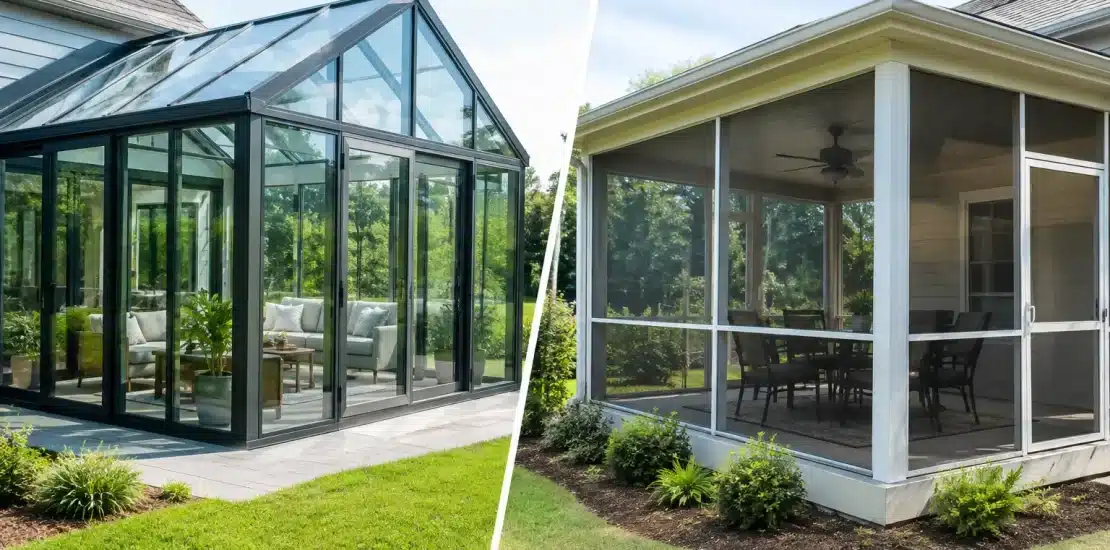
A patio that looks inviting in the morning can become too hot, too damp, or too bug-filled to enjoy by late afternoon. For Northeast Florida homeowners, the glass room versus screen room decision is less about choosing a look and more about deciding how you want to use the space through heat, heavy rain, pollen season, and cooler winter evenings.
Both options can turn an underused patio, lanai, porch, or poolside area into a more comfortable part of the home. The better choice depends on whether open-air ventilation or enclosed comfort matters more, how much sun reaches the area, the existing roofline, and the level of weather protection you expect.
Glass Room Versus Screen Room at a Glance
A screen room is an outdoor living space protected by screen panels, typically supported by an aluminum enclosure system and connected to an existing patio cover, porch roof, or a newly designed roof structure. It keeps out mosquitoes, leaves, and much of the windblown debris while preserving the sounds, breezes, and humidity of being outdoors.
A glass room, often called a glass enclosure, sunroom, or Florida room depending on its design, uses windows or glass wall systems to create a more enclosed space. It provides greater separation from outdoor weather and allows the room to be used more consistently when rain, humidity, wind, or cooler temperatures would make a screened area less appealing.
The difference becomes clear on a rainy weekend. A screened patio offers shelter from direct rainfall under a solid roof, but moisture and wind can still move through the screens. A glass room can remain a comfortable place for dining, reading, working, or spending time with family while the weather changes outside.
When a Screen Room Makes the Most Sense
A screen room is often the right answer when your main goal is to enjoy the outdoors without the parts that make outdoor living frustrating. It is especially effective for homeowners who already have a covered patio or lanai and want to stop dealing with mosquitoes, no-see-ums, leaves, and debris.
Airflow is the primary advantage. Properly positioned screen walls allow breezes to move through the space, which can make a shaded patio feel noticeably better during much of the year. For pool owners, a screen enclosure can also reduce debris in the pool area while creating a protected setting for lounging and entertaining.
A screen room generally involves a lower investment than a fully glazed enclosure because it requires less glass, fewer window components, and less conditioning of the interior environment. It can also preserve the relaxed, open feeling many Florida homeowners want from a porch or lanai.
That openness comes with limits. Screens do not block humidity, and they offer little protection from wind-driven rain. A screen room may be pleasant on a mild afternoon but less useful during a summer downpour, on colder days, or when a strong breeze pushes rain toward the enclosure. Privacy can also be a consideration if the patio faces a close neighbor or a busy backyard.
Screen room planning details that matter
Not every existing patio is ready for an enclosure without adjustments. The roof structure, slab condition, drainage path, gutter placement, and attachment points all affect the finished result. A poorly planned enclosure can direct water where it does not belong, feel too dark under a deep roof, or create awkward access from the home to the yard.
For sunny Jacksonville properties, the direction of the exposure matters as well. A west-facing screened patio can still collect significant late-day heat. Additional shade elements, roof design, or a ceiling fan may improve comfort, but they will not create the controlled environment of a glass room.
When a Glass Room Is the Better Choice
A glass room is designed for homeowners who want a patio conversion to function more like an extension of the home. The walls provide a physical barrier against insects, rain, blowing debris, and much of the outdoor humidity. This makes the room suitable for uses that require more dependable conditions, such as a breakfast area, hobby space, reading room, home office, or gathering space.
The ability to close the room during a storm is a meaningful advantage in Northeast Florida. Instead of moving cushions, ending a meal, or abandoning the patio when rain arrives, homeowners can continue using the space. Glass also gives you a clear view of the yard, garden, pool, or water while providing a stronger sense of enclosure.
A glass room needs more careful design than simply adding windows around a slab. Window placement affects views, ventilation, and glare. Roof style affects ceiling height, daylight, drainage, and how naturally the addition connects to the home. The amount of direct sun may call for insulated glass, shading strategies, or a thoughtful balance of glass and solid wall sections.
A well-planned room should feel bright without becoming a greenhouse by midafternoon. That is particularly important on south- and west-facing exposures, where intense sun can affect comfort and increase the demand on cooling equipment. Operable windows can provide fresh air during favorable weather, while climate control can make the room useful more months of the year.
Understand the comfort and cost trade-off
A glass enclosure usually costs more than a screen room because it includes more substantial framing, windows or glass systems, finishing details, and often electrical or HVAC planning. It may also require more ongoing care, including window cleaning, track maintenance, and occasional seal or hardware service.
In return, it delivers a higher level of everyday usability. The key question is whether you want a protected outdoor room or a space that can support indoor-style activities. Homeowners who picture coffee on rainy mornings, a comfortable spot for grandchildren, or a quiet workspace tend to find greater value in glass. Those who want open-air dinners and bug-free poolside relaxation may prefer screens.
How Florida Weather Changes the Decision
Jacksonville-area weather asks a lot of any exterior improvement. Heat, humidity, sudden rain, high UV exposure, pollen, coastal air in some communities, and seasonal storms all influence material choices and room design.
Screens are excellent at keeping insects and larger debris out, but they cannot stop humidity or seal out fine windblown rain. Glass gives stronger protection, yet it must be planned to manage solar heat. Neither option is automatically better in every backyard.
The location of the enclosure on the house matters just as much as the enclosure type. A shaded east-facing patio may work beautifully as a screen room. A west-facing patio with no tree cover may be more comfortable as a glass room with appropriate glazing and shading. Homes near the coast may also benefit from material selections suited to salt-air exposure.
Drainage deserves equal attention. Water should move away from the house and enclosure, and the roof system should tie into existing gutters and rooflines thoughtfully. These details are not always visible in a finished project, but they have a direct effect on long-term performance.
Start With How You Will Actually Use the Space
Before selecting glass or screen panels, picture the room at different times of day and in different seasons. Will it be used mostly for casual meals after work? Is it a poolside retreat? Do you want a dry, bright place to exercise, work, or host family when the weather is unsettled?
Also consider access. A room that opens conveniently from the kitchen may become a favorite dining and entertaining area. One that serves as the main route to the pool or backyard needs doors and traffic flow that work for daily routines. Furniture size, ceiling fans, lighting, and storage for pool or patio items should be considered before construction begins rather than after the enclosure is complete.
Since 1979, Schnorr Home Improvements has approached these decisions as site-specific design questions, not standardized packages. The most successful enclosure fits the home’s architecture while addressing the way its owners want to live in it.
A screen room can give your home a breezy, protected outdoor retreat. A glass room can create a more dependable living area with year-round potential. The right choice is the one that makes your existing patio or lanai a place you will use on ordinary days, not just the perfect ones.