
How to Choose Patio Screens for Florida Homes
- October 20, 2026
- Posted by: schnorrhome
- Category: Home Improvement Planning
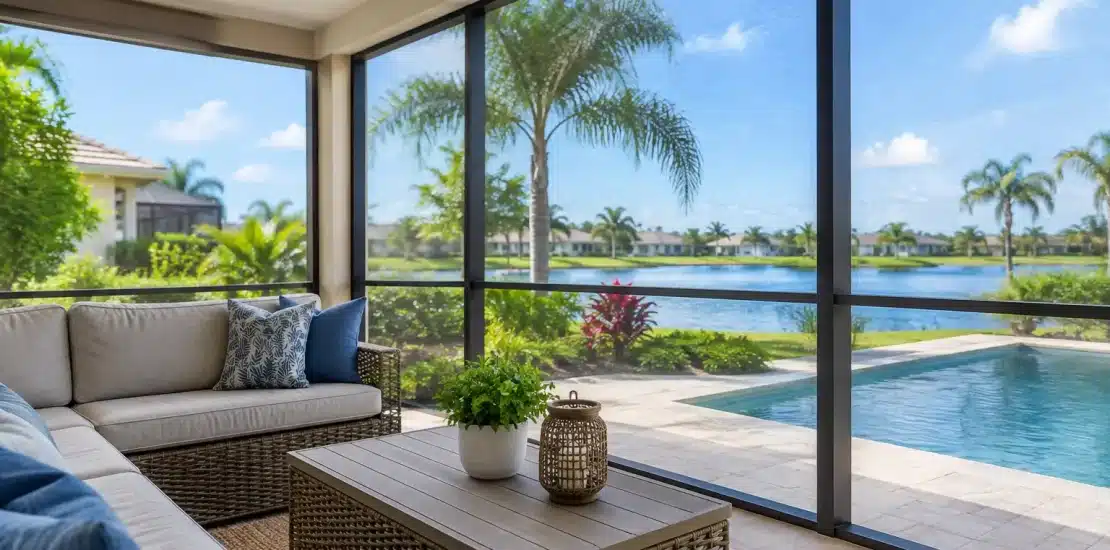
A patio can look inviting at noon and become nearly unusable by dusk when mosquitoes arrive, glare builds, or leaves blow across the furniture. Knowing how to choose patio screens means looking beyond the mesh itself. The right screen enclosure should suit how you use the space, the orientation of your home, and the heat, rain, humidity, and wind common across Northeast Florida.
A screen that performs well around a pool may not be the best choice for a porch used for evening meals. Likewise, a darker mesh that helps with sun glare can slightly change the view, while a finer insect screen may reduce airflow. Good planning is about choosing the right balance for your property rather than selecting a one-size-fits-all product.
How to choose patio screens: begin with the space’s purpose
Start with the question homeowners sometimes skip: What needs to happen in this space? A screened patio used for a morning coffee and occasional fresh air has different requirements from a lanai that serves as a daily dining room, children’s play area, or poolside gathering spot.
If insects are the main frustration, prioritize an insect-resistant screen with openings fine enough to limit mosquitoes and other small pests. If you enjoy an open breeze and your patio is already well shaded, standard screen mesh may provide the comfortable, unobstructed feel you want. For an exposed patio that gets harsh afternoon sun, solar screening may make the area noticeably more usable by reducing glare and a portion of heat gain.
Also consider what you want to keep out. Pool enclosures often need to manage leaves, pine needles, and windblown debris as much as insects. A patio near landscaping may benefit from a screen choice that is durable enough to handle regular contact with branches, toys, pets, or active family use.
Match the mesh to Florida conditions
Florida patios ask more of a screen than many homeowners realize. Humidity, intense UV exposure, sudden downpours, salt air near the coast, and seasonal storms all affect comfort and material life. The screen fabric matters, but the surrounding frame, fasteners, roof connection, and drainage planning are equally important to a lasting enclosure.
Standard fiberglass screen
Fiberglass is a familiar choice for many screened patios and porches. It allows generous airflow, offers good visibility, and works well when the primary goal is to create a basic barrier against common insects and debris. It is often a practical fit for covered patios where direct weather exposure is limited.
Its trade-off is strength. Standard fiberglass can be more vulnerable to tears or stretching where pets, children, furniture movement, or landscaping create regular contact. It can be a good everyday choice, but it may not be the best match for every high-traffic opening.
No-see-um and fine insect screen
Fine insect screening uses a tighter weave to help keep out smaller biting insects. That can be a worthwhile upgrade in areas where gnats, sand flies, and mosquitoes regularly interrupt outdoor time, especially near water, marshy ground, or dense landscaping.
The tighter weave can reduce airflow somewhat compared with standard screen. In Jacksonville’s humid climate, that difference deserves consideration. A well-designed enclosure can help offset it with appropriate openings, roof design, ceiling fans, and thoughtful placement of doors and walls. The goal is not simply to seal the patio off, but to maintain a comfortable exchange of air.
Pet-resistant screen
For households with dogs or cats, pet-resistant screen is often worth considering at lower wall sections, doors, or other areas where claws and paws tend to make contact. It is stronger than typical screen mesh and can reduce the need for frequent small repairs.
This material is not indestructible, and it usually costs more than standard mesh. Still, using it selectively in vulnerable areas can be a sensible compromise between durability and budget without requiring every panel to use the same material.
Solar and privacy screen
Solar screen can reduce glare and help soften the heat of direct sun, making it especially useful on west-facing patios that become difficult to enjoy late in the day. It can also add a degree of daytime privacy and help protect outdoor furnishings from constant UV exposure.
The trade-off is visibility and brightness. Darker solar mesh can improve outward views by reducing glare, yet it may make the enclosed area feel more shaded from inside. On a patio overlooking a garden, pool, or preserve, the right openness factor should be selected carefully so the screen improves comfort without sacrificing the view that makes the space special.
Consider airflow, shade, and the direction your patio faces
A patio screen is only one part of the comfort equation. Before choosing mesh, look at how sun moves across the area. A south- or west-facing patio may need more shade management than one that receives mostly gentle morning light. Existing roof cover, nearby trees, the home’s roofline, and the height of surrounding structures can all change how much heat reaches the space.
A screen enclosure can preserve outdoor airflow, but it cannot correct a patio that is poorly planned for sun exposure or drainage. On a hot, enclosed-feeling patio, additional screened openings, a revised roof design, or a ceiling fan may matter as much as the mesh selection. On a rain-prone patio, the roof and gutter system should direct water away from the enclosure and foundation rather than creating runoff problems at the door or slab edge.
This is why site-specific planning matters. The best layout for a narrow side patio may be very different from the best solution for a large pool deck, even if both homeowners request screened protection.
Choose a frame and layout that fit the house
Patio screens should look like a natural extension of the home, not an afterthought attached to it. The enclosure’s roof style, framing color, panel layout, door placement, and attachment points all affect both appearance and daily function.
A simple screened patio under an existing cover may need only a carefully framed enclosure. An uncovered slab might call for a new patio cover, screen room, or a more substantial design that coordinates with the home’s existing roofline. Gable-style structures can bring in height and visual openness, while a studio-style roof may better suit certain homes and property layouts.
Think through access before construction begins. Where will people enter from the house? Is there a convenient path to the grill, pool, yard, or storage area? Will a screen door swing into a furniture zone? These small decisions shape whether the finished space feels easy to use every day.
Plan for maintenance and future repairs
All patio screens eventually need attention. Storm debris, accidental impacts, UV exposure, and normal wear can lead to torn panels, loose spline, or damaged framing over time. Choosing a material that fits your household’s use can reduce repairs, but it is wise to expect routine maintenance as part of owning a screen enclosure.
Keep shrubs and tree limbs trimmed away from the screen, clean dirt and pollen from frames with mild soap and water, and inspect door hardware periodically. After severe weather, look for loose panels, bent members, or water collecting where it should drain freely. Addressing small issues early can help protect the structure and preserve the enclosure’s appearance.
If an existing patio enclosure feels dark, hot, poorly ventilated, or constantly in need of patching, replacing individual screen panels may not solve the underlying problem. A professional assessment can determine whether repair, rescreening, structural updates, or a redesigned enclosure is the more practical long-term choice.
Let the patio guide the final decision
The most successful patio screens make outdoor time feel easier: fewer bugs during dinner, less debris around the pool, more shade in the afternoon, and a clearer transition between the home and yard. Since 1979, Schnorr Home Improvements has approached these projects by evaluating the actual site – including roof configuration, sunlight, airflow, drainage, access, and how the homeowner intends to use the space.
Before selecting a screen, spend time on the patio at the hours you expect to use it most. Notice where the sun lands, how the breeze moves, where insects gather, and which views you want to preserve. Those observations provide the clearest starting point for a screened space that remains comfortable long after the project is complete.